
Lineage-Specific Venom Gene Expression Shapes Chemical Diversity in Cephalopods
Affiliations
¹ Graduate Center, Programs in Biology, Biochemistry, Chemistry, City University of New York, New York, New York, USA.
² Department of Chemistry and Biochemistry, City University of New York, Hunter College, Belfer Research Building, New York, New York, USA
³ The Department of Organismic and Evolutionary Biology, Harvard University, Cambridge, Massachusetts, USA
⁴ Veterinary Centre for Resistance Research, Freie Universität Berlin, Berlin, Germany
⁵ NYU Langone Health, New York, New York, USA
⁶ Marine Biological Laboratory, Woods Hole, MA 02543, USA
⁷ Harvard Museum of Comparative Zoology, Cambridge, Massachusetts, USA
Corresponding author: mholford@fas.harvard.edu
Abstract
Animal venoms represent a major source of chemical novelty, yet how venom compounds originate, diversify, and are maintained across deep evolutionary timescales remains poorly understood. This gap is especially pronounced in cephalopods, which evolved venom systems used in predation, defense, and sexual competition, but whose venom genetic architectures, secretory cell types, and venom-producing glands remain largely unexplored. To date, only a single cephalopod venom compound with confirmed paralytic activity and a known primary sequence, SE-CTX from the golden cuttlefish Acanthosepion esculentum , has been described. Here, we reconstruct the evolutionary history, molecular diversity, and glandular localization of SE-CTX–like proteins using a multimodal approach. We identify 29 homologs across 20 squid and cuttlefish species and define a previously unrecognized venom gene family, which we name deca-ctx , specific to decapodiform cephalopods (squids and cuttlefish). Phylogenetic analyses reveal a single origin of deca-ctx followed by gene duplication and lineage-specific diversification, indicating long-term retention of this venom gene. Predicted DECA-CTX protein structures were separated into two clusters and 20 singletons highlighting potentially extensive structural diversity within a single cephalopod venom gene family. Proteomic analysis confirms expression of five DECA-CTX proteins across three species. Our imaging and histological analyses localize deca-ctx expression to specialized secretory cells within squid and cuttlefish venom glands. Together, these findings reposition SE-CTX as part of an evolutionarily and chemically diverse venom system, rather than an isolated venom protein, and establish cephalopods as a key lineage for investigating how new venom genes arise, diversify, and are integrated into functional venom arsenals.
Introduction
Venom is a successful biochemical and ecological adaptation that has evolved independently >100 times across all major animal lineages, where it is predominately used for defense, predation, or sexual competition. Venom arsenals in individual species range from a few compounds to thousands. The diversity of venom has transformed our understanding of physiology and inspired therapeutic development. For example, bungarotoxin, found largely in venomous snakes, has been used extensively in neuroscience to characterize different subtypes of nicotinic acetylcholine receptors (nAChRs). Additionally, several blockbuster drugs for treating a variety of human diseases and disorders have been developed from venom components, such as Captopril® for hypertension from the Brazilian pit viper, Extendin® for diabetes and Ozempic® for diabetes and weight loss, both derived from the Gila monster, and Prialt® for chronic pain, from the cone snail Conus magus . Along with this incredible chemical diversity, venom delivery systems vary greatly in structure and physiology. However, the shared chemical, molecular, and cellular features across the diverse landscape of venom systems remain largely unknown. Despite advances in genomics and transcriptomics, our understanding of venom gene regulation and the development of venom-producing tissues remains limited. To begin to address this knowledge gap, we leveraged recent technological breakthroughs in cephalopod genome sequencing and husbandry to examine the evolution of venom genes across several cephalopod taxa.
Coleoid cephalopods comprise over 800 species of soft bodied octopus, cuttlefish, and squid. Coleoids are remarkably successful marine predators by virtue of an array of specialized traits including adaptive camouflage behaviour, highly complex nervous systems, and use of venom to subdue and capture prey. The toxic properties of cephalopod saliva were first discovered in the late 19th century when Lo Bianco injected secretions from octopus venom glands into crabs, resulting in hindered locomotion and then death. Since then, venoms from over 20 species of cephalopods have been described using biological assays and -omic technologies. The main effect of cephalopod venom appears to be paralysis, as demonstrated in crabs, mice and locusts.
The posterior salivary gland (PSG) is the primary organ of cephalopod venom production. Sitting at the base of the mantle in close association with the digestive glands, they are typically found as pairs in octopus ( Octopoda ), cuttlefish ( Sepiida ), and the bobtail squid ( Sepiolida ). However, the PSG is a single gland in most species of myopsid and oegopsid squid. Several proteins with potential paralytic activity, termed cephalotoxins (CTX), are found in the PSGs of cephalopods. The nomenclature “CTX” refers to any protein expressed by the cephalopod PSG that exhibits paralytic activity. CTX has been identified in several cephalopod species including: Acanthosepion esculentum , Acanthosepion pharaonis , Octopus vulgaris , Octopus macropus , Sepia officinalis , Eledone cirrhosa , Enteroctopus dofleini . The first and only CTX with a known primary amino acid sequence, SE-cephalotoxin (SE-CTX), has been isolated from a paralytic fraction of the PSG of the golden cuttlefish ( A. esculentum ; prior name: Sepia esculenta , Uniprot: B2DCR8). SE-CTX shows low similarity to any other known venom compounds. However, homologs of se-ctx genes have been found in other decapodiformes (squids and cuttlefish) like the pharaoh cuttlefish ( A. pharaonis ) and in the common cuttlefish ( Sepia officinalis ).
Here, we identify and characterize venom gene se-ctx homologs in 20 decapodiform species and visualize their expression in the PSGs of both hatchlings and adults. Using comparative multimodal -omic, phylogenetic, and imaging datasets, we systematically characterize se-ctx homologs across several squid and cuttlefish species that share a common evolutionary lineage. We refer to this family of venom genes as decapodiform-ctx ( deca-ctx ) and the proteins they encode as Decapodiform-CTX (DECA-CTX). Specifically, we map deca-ctx expression and assess interspecific differential expression pattern in squid and cuttlefish PSGs. We describe the predicted 3D structure of identified DECA-CTX proteins, which form distinct structural clusters, suggesting that these proteins have multiple molecular targets. Our work provides evidence for widespread distribution of se-ctx homologs among squids and cuttlefish, suggesting that it is a common component of cephalopod venom arsenals and potentially evolved through gene duplication. Together, our findings establish the conservation of se-ctx expression and structural characterization across diverse squid and cuttlefish taxa, transforming SE-CTX from a single-species toxin into a deeply conserved and diversified element of the cephalopod venom system.
Results
Posterior salivary gland morphology is highly conserved across adult cephalopods
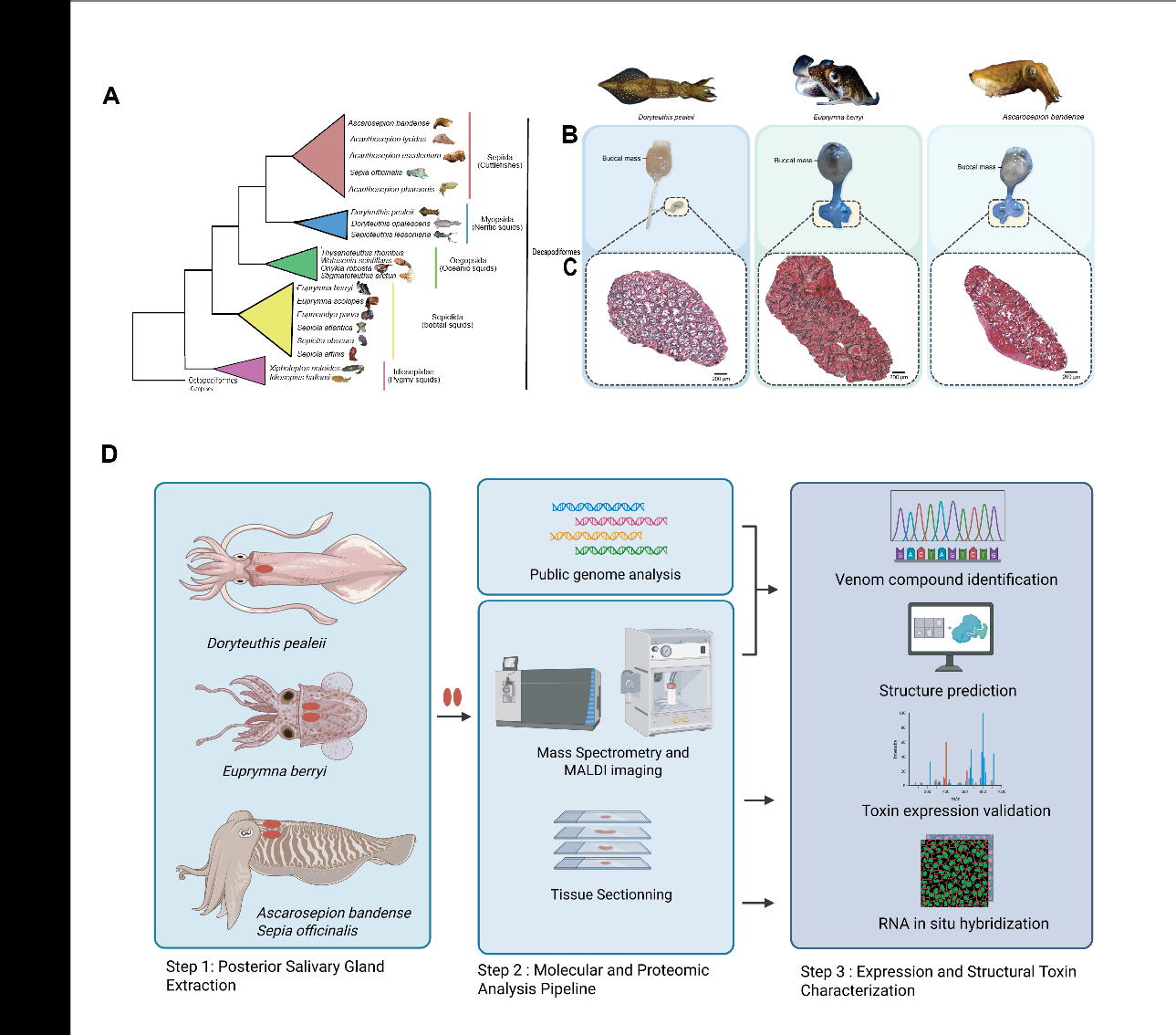
To begin to examine cephalopod venoms, we conducted a comparative histological study of the PSG of the longfin inshore squid ( D. pealeii ), hummingbird bobtail squid ( E. berryi ), and dwarf cuttlefish ( A. bandense ). Our PSG studies closely align with previous literature describing a variety of PSG cell types present. Specifically, the PSG tissue has a glandular appearance, with putative secretory cells surrounding a central lumen consistent with secretory glands. We observed a relatively homogenous branched tubular arrangement, with E. berryi and A. bandense showing a greater similarity to each other compared to D. pealeii . The cells present in each “tubule” of the E. berryi and A. bandense sections show an abundance of granules in the apical region of the cells towards the lumen of the branched tubules, compared to D. pealeii , whose granules appear less densely packed. These findings confirm that PSGs from diverse cephalopod taxa display conserved cellular and histological features.
The family deca-ctx is duplicated across decapodiform species
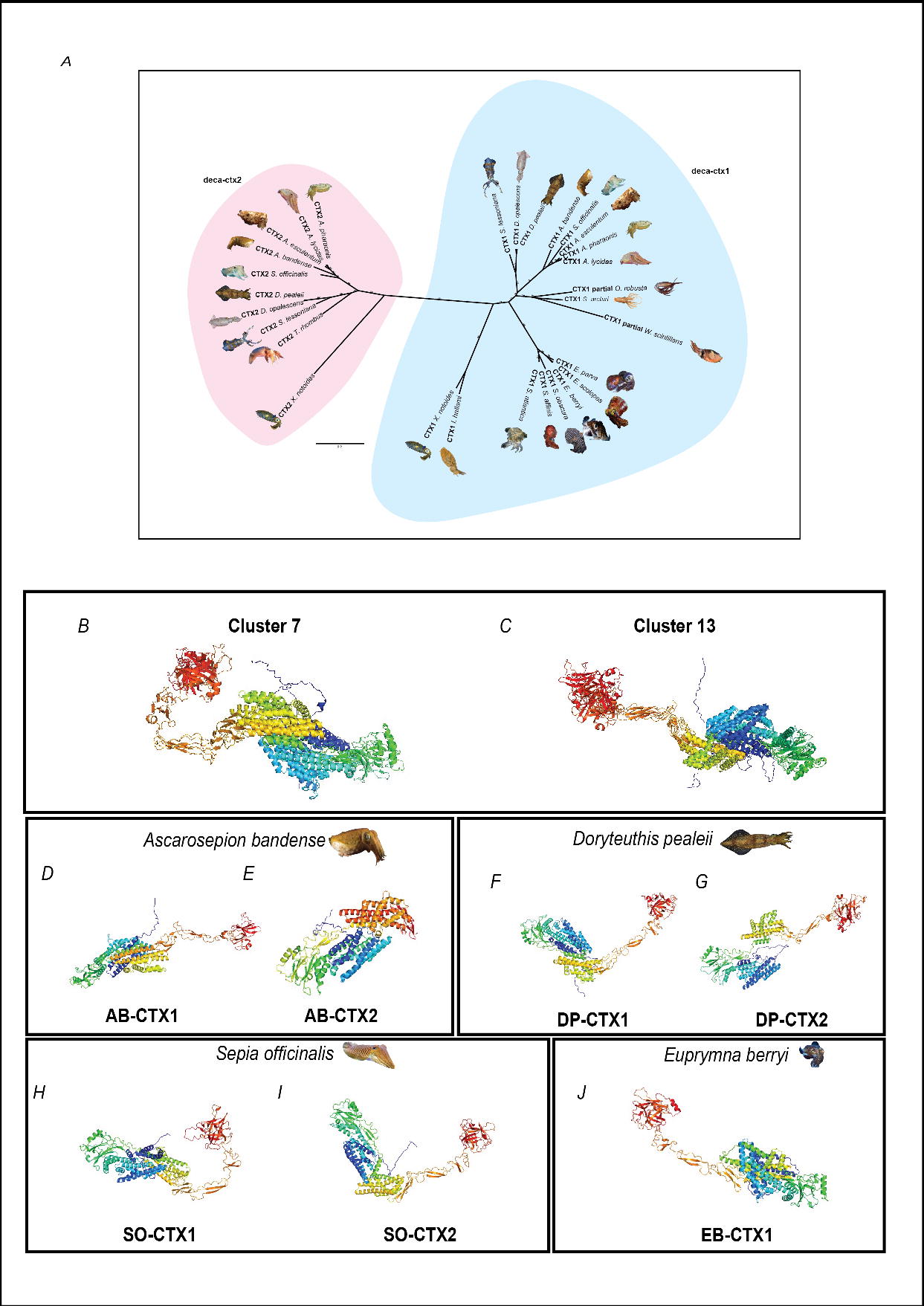
To reconstruct the phylogenetic relationships of se-ctx -like genes that comprise the newly defined deca-ctx family, we surveyed available genomic data. We identified open reading frames (ORFs) with high similarity to originally identified se-ctx sequences in 18 species. We also found partial sequences with high similarity to se-ctx in two additional species, clubhook squid ( Onykia robusta ) and the firefly squid ( Watasenia scintillans ). In the golden cuttlefish ( A. esculentum ), the cephalopod in which the original SE-CTX protein was isolated and identified, we found an additional putative se-ctx gene on the same chromosome sequences which has nucleotide sequence similarity of 51.9% to the previously identified se-ctx gene. In species with genomic data available, we found two deca-ctx genes, deca-ctx1 and deca-ctx2 , in most decapodiformes. However, all of the bobtails we examined seem to possess a single paralog of se-ctx , deca-ctx1 . These results suggest that the last common ancestor of extant decapodiformes possessed two se-ctx -like genes, one of which was independently lost in different lineages. For example, in the four species of bobtails examined, all possess a single deca-ctx gene that branches with deca-ctx1 in other lineages, suggesting a loss of deca-ctx2 specific to a common ancestor of bobtail lineage. In contrast, the pygmy squid ( Xipholeptos notoides ) possesses both deca-ctx1 and deca-ctx2 , but Hallam’s pygmy squid ( Idiosepius hallami ) only has deca-ctx1 , suggesting independent loss of deca-ctx2 in this lineage. The loss of venom function is not uncommon in mollusks.
Our phylogenetic analyses of deca-ctx genes identified 29 genes across 20 species, revealing an evolutionary origin that predates the origin of Decapodiformes, followed by lineage-specific gene losses. Similarity searches (TBLASTN) of the se-ctx sequence against the core_nt and refseq_genomes at NCBI did not identify se-ctx -like sequences in non-decapodiform mollusks, including in octopuses. Therefore, the duplication of deca-ctx genes that we found in Decapodiformes is likely exclusive to squids and cuttlefish.
DECA-CTX structures group into two distinct clusters and 20 structurally divergent singletons
Determining the significance of the sequence variations of the deca-ctx gene homologs on paralytic activity requires an understanding of the mechanism of action at the protein level. To date, the exact mechanism of any cephalotoxin is not well understood. Additionally, whether the mechanisms of action for SE-CTX and/or the DECA-CTX paralogs identified here are similar to those of other cephalotoxins is unknown. Prior functional experiments with octopus were performed with crude extracts, and there are no reported sequences for the active components. To determine the potential molecular activity of the DECA-CTX paralogs we identified, we predicted their structures using AlphaFold2.0. We used TM-align to evaluate structural homology between DECA-CTX proteins.
Notably, two structural clusters containing five DECA-CTX proteins were identified: A cluster of two DECA-CTX proteins IHAL-CTX1 and XNOT2-CTX1 (Cluster7) and a cluster of three homologs SLES-CTX1, AB-CTX1 and SLYC-CTX1 (Cluster13). Twenty DECA-CTX proteins were highly structurally divergent and due to the large overall protein size and low pairwise root mean square deviation (RMSD) and template modelling ™ scores, they did not form clusters, and are herein denoted as “singletons”. Members of clusters 13 and 7 exhibited a characteristic “mini beta barrel” feature described by 4-7 alpha helices linked by a flexible beta-sheet-loop-helix connector forming a “hockey stick-type” topology. This “hockey stick” architecture is represented with slight variations across all DECA-CTX proteins except AB-CTX1 which presents a largely alpha helical topology.
Analyses of conserved domains present in several of DECA-CTX sequences highlight potential functional activity. For example, DP-CTX2, SP-CTX2, SO-CTX2 and XN-CTX2 have regions that match Low-Density Lipoprotein (LDL) Receptor class A, Sushi also known as Complement Control Protein (CCP) module or Short Consensus Repeat (SCR), Thrombospondin type 1 repeats (TSRs or TSP-1), and Epidermal Growth Factor (EGF) domains. Each of these domains are cysteine-rich motifs that are stabilized by multiple disulfide bonds and are usually important in binding interactions, such as ligand or receptor binding in the case of LDL-class A and EGF, respectively. This suggests that DECA-CTX proteins may modulate their paralytic activity through high-affinity interactions with extracellular ligands or cell-surface receptors involved in neuromuscular signaling.
deca-ctx transcripts are expressed in PSGs of adult, hatchlings, and late-stage embryos
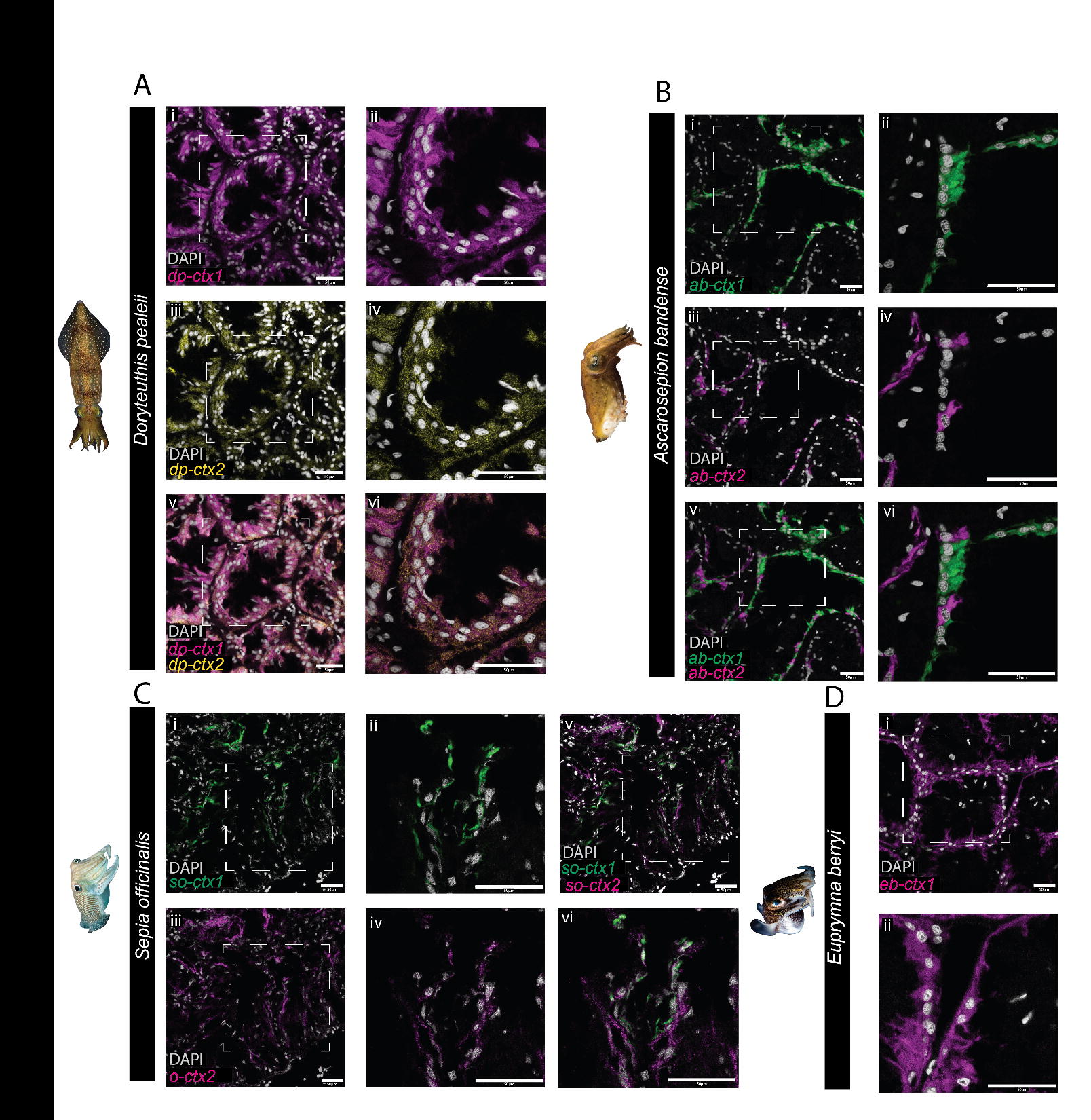
To test for deca-ctx gene expression in squids and cuttlefish, we used mRNA in situ hybridization by chain reaction (HCR) to visualize transcript expression in dissected PSGs of four species: D. pealeii , E. berryi , S. officinalis and A. bandense . In all four species, we found deca-ctx expression to be specific to cells surrounding the lumens of secretory granules in the PSG, and we observed no expression in surrounding oesophagus or buccal mass tissue. In D. pealeii , both deca-ctx paralogs ( dp-ctx1 and dp-ctx2 ) were found to be highly co-expressed. In contrast, in A. bandense , paralogs ( ab-ctx1 and ab-ctx2 ) were expressed in completely distinct cells within the PSG. Similarly, in S. officinalis , paralogs ( so-ctx1 and so-ctx2 ) were expressed predominately in distinct cells within the PSG. In E. berryi , we saw clear expression of their single eb-ctx1 throughout their PSG as well. These results are the first to visualize the conservation of venom gene expression in cephalopod venom glands. Moreover, these experiments highlight the evolution of deca-ctx gene expression within the cell types of the PSG and indicate that while some species, such as D. pealeii , appear to co-express deca-ctx paralogues, others, like A. bandense express distinct deca-ctx paralogues in a non-overlapping manner. The broad expression of deca-ctx genes across squid and cuttlefish suggests it is an important component of decapodiform venom arsenals.
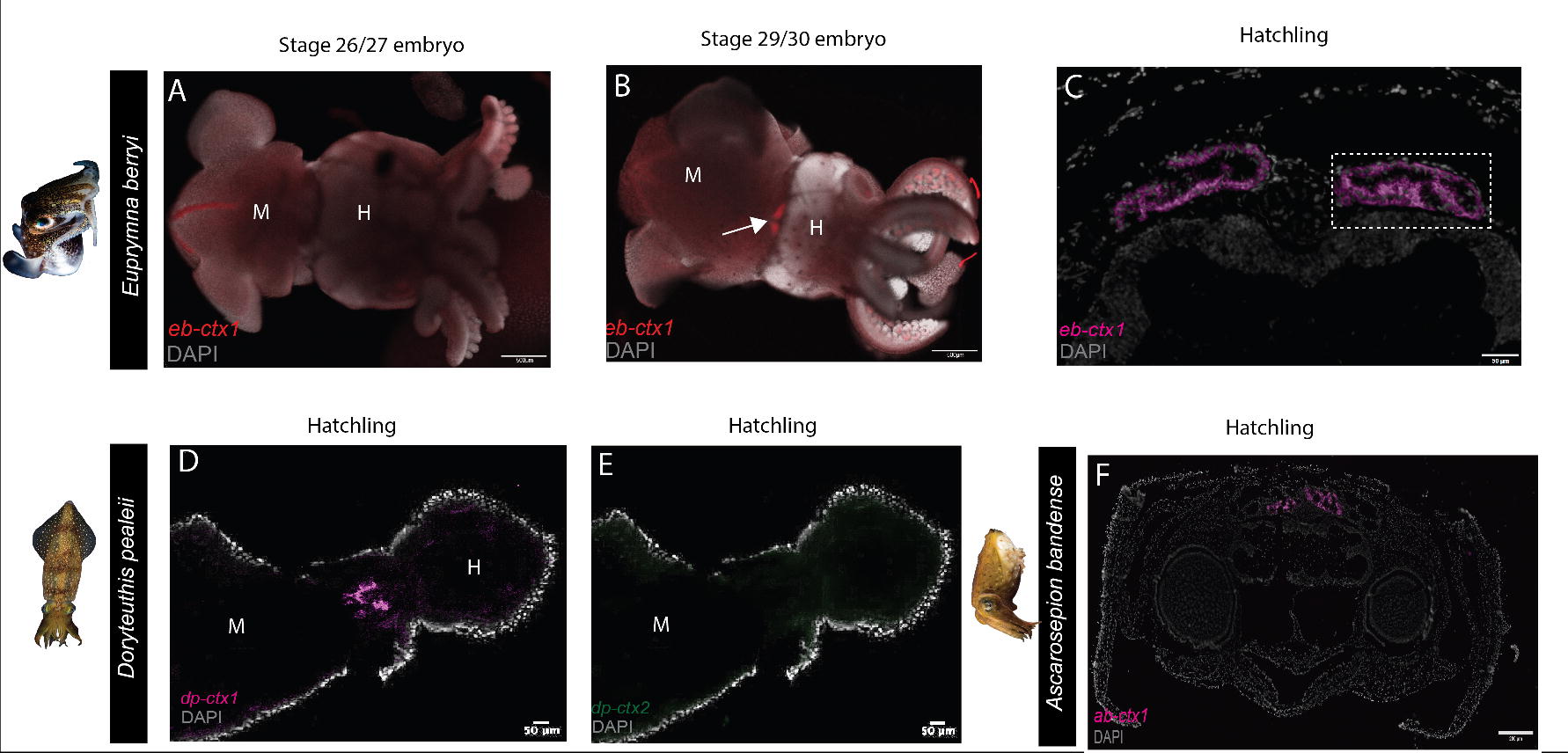
To determine when during squid and cuttlefish development the deca-ctx genes are expressed, we applied in situ HCR for deca-ctx transcripts in hatchlings and embryos of E. berryi as well as in the hatchlings of D. pealeii , and A. bandense . We observed no eb-ctx1 staining in before late embryonic stages in E. berryi embryos. However, eb-ctx1 is expressed at the base of the mantle in the shape and the region where we would expect to see the two PSGs near hatching (stage 29/30). Additionally, in E. berryi hatchlings (~30 days old), we observe clear and specific expression of eb-ctx1 in the PSGs and no expression in the oesophagus and surrounding brain tissue. These findings suggest that the expression of deca-ctx begins within the PSG shortly before hatching in E. berryi . In D. pealeii hatchlings, we observed dp-ctx1 expression but no dp-ctx2 expression. Since dp-ctx1 and dp-ctx2 are co-expressed in the PSGs of adult D. pealeii , differences in expression in the hatchlings suggests these genes are differentially regulated across life stages in this species. Similar to E. berryi hatchlings, ab-ctx1 expression is present in left and right PSGs at the hatchling stage in A. bandense . Taken together, this suggests deca-ctx1 venom transcript expression is present in the hatchling stage in these three species, potentially allowing them to use their venom at this early stage of development.
Mass spectrometry confirms DECA-CTX protein expression in squid and cuttlefish venom glands
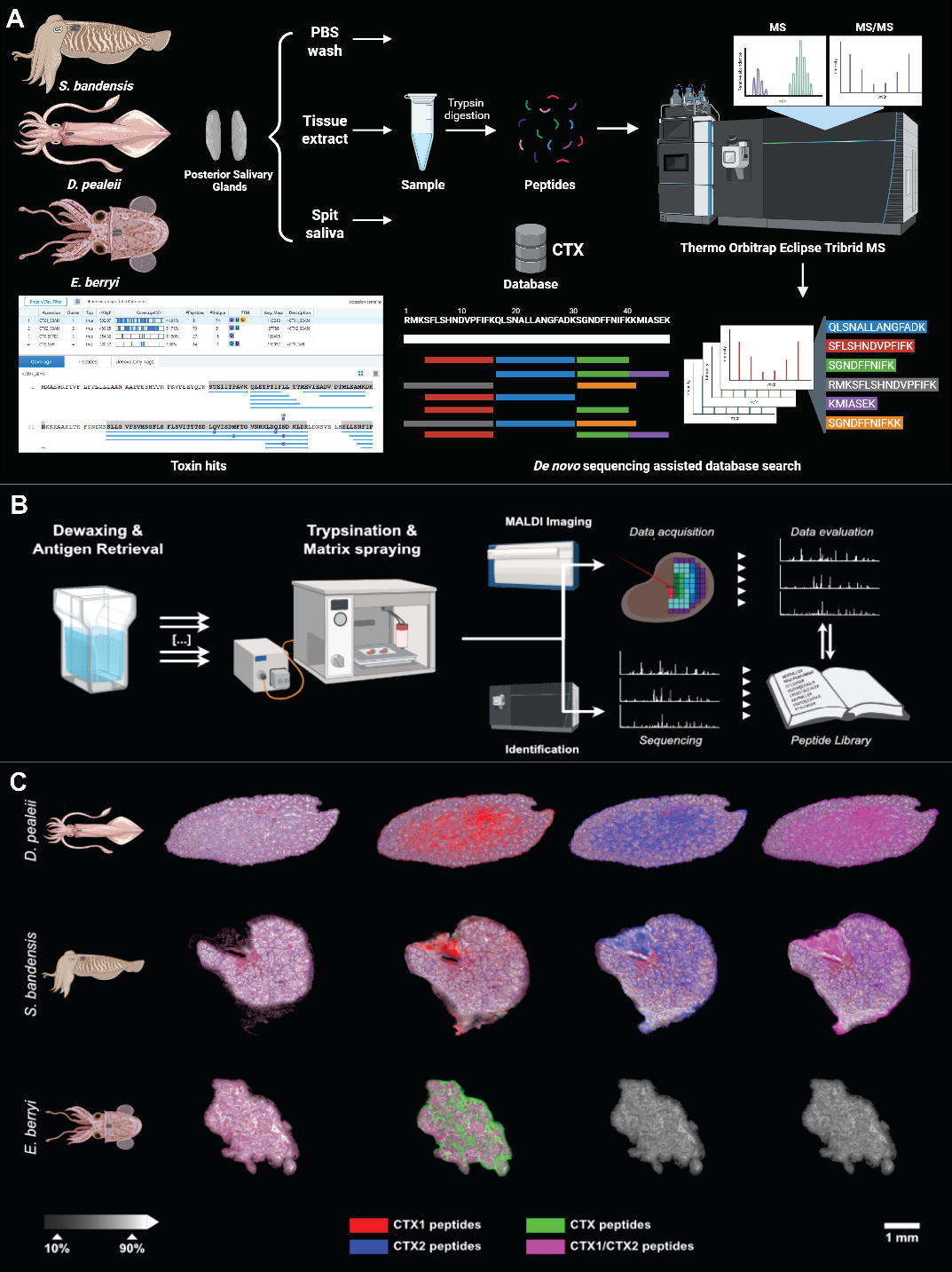
To validate expression of DECA-CTX proteins, we used a multi-platform approach of bottom-up mass spectrometric analysis and matrix-assisted laser desorption/ionization (MALDI) mass spectrometry imaging (MSI) to characterize and visualize DECA-CTX proteins in the PSGs of A. bandense , D. pealeii and E. berryi . Bottom-up analysis of the trypsin-digested crude venom extracts from the PSGs of A. bandense , D. pealeii , and E. berryi , identified several key venom protein families, including DECA-CTX, cysteine-rich secretory proteins, phospholipase A2 and B, and serine proteases. We found ab-ctx1 , ab-ctx2 , dp-ctx1 , dp-ctx2 , and eb-ctx1 sequences from transcriptome and genome databases, confirming the presence of DECA-CTX proteins in the venom arsenals of A. bandense , D. pealeii , and E. berryi . Importantly, peptide matches were highly specific to deca-ctx gene sequences of the same species. For example, AB-CTX1 and AB-CTX2 peptides from A. bandense matched exclusively with their corresponding transcript sequences and not with those from D. pealeii or E. berryi . In specimens with two PSGs, such as E. berryi and A. bandense , base peak chromatograms of the extracted venom samples were largely identical, suggesting there is no differential expression between the left and right PSGs.
MALDI-MSI analyses confirmed the presence of DECA-CTX proteins and allowed us to clarify differential spatial expression in the PSG by characteristic m/z values (mass features) within the venom gland system at 20 μm spatial resolution. D. pealeii DECA-CTX proteins appears to be mostly in the channels in the center of the glands and along the peripheral membrane. In contrast, in A. bandense and E. berryi , there is more of a punctuated distribution in channels in the gland and along the membrane. Additionally, spatial venomics corroborates transcriptomic and bottom-up findings that E. berryi expresses EB-CTX1. The unique distributions of deca-ctx homologs in the PSGs could reflect how the protein is expressed and released. Differential expression of predatory versus defensive venoms has been suggested to be related to spatial distribution in various venom glands. The identification of species-specific DECA-CTX sequences by mass spectrometry aids in our understanding of evolutionary divergence in the venom arsenal of cephalopods. This divergence potentially reflects adaptations to distinct ecological niches or diets. The sequence variation present in the DECA-CTX family needs to be further investigated for their biological activity to clarify the impact of these variations on the protein or peptide’s bioactivity, target specificity or regulatory control.
Discussion
Phylogenetic analyses suggest that deca-ctx genes originated early in cephalopod evolution and diversified through lineage-specific expansions, resulting in pronounced variation in sequence composition and domain architecture. Notably, deca-ctx genes are expressed in the PSGs of hatchlings, suggesting this venom repertoire may be available to deploy from early life stages for predation or defense. Although the functional activity of the identified deca-ctx homologs remains to be experimentally determined, conserved domain analyses reveal the presence of key structural motifs characteristic of the paralytic SE-CTX toxin. These domains, LDL-Class A, Sushi, TSP-type1, and EGF, often appear in the same protein and are small cysteine-rich modules that play a role in binding interactions related to cell signaling, among other activity. The conservation of these domains suggests functional similarity and implicates these proteins in venom-mediated prey immobilization. The combination of conserved structural cores and variable domains is also consistent with functional diversification and suggests that deca-ctx proteins may span a range of biochemical properties and venom activities.
We integrated comparative genomics, phylogenetics, imaging, and mass spectrometry to validate the expression of deca-ctx1 and deca-ctx2 in longfin inshore squid ( Doryteuthis pealeii ), hummingbird bobtail squid ( Euprymna berryi ), dwarf cuttlefish ( Ascarosepion bandense ), and common cuttlefish ( Sepia officinalis ), and to corroborate predicted molecular heterogeneity at the protein level. This multi-modal approach enables direct linkage between gene-level diversity, structural variation, and expressed venom components; moving beyond gene prediction to experimentally grounded validation of venom arsenals in traditionally non-model organisms like cephalopods. Together, our findings provide a snapshot of the molecular and structural diversity of cephalopod venoms while establishing a foundation for future studies examining how evolution, development, sequence divergence, tissue specificity, and three-dimensional structure contribute to functional diversification of deca-ctx homologs across biological scales in one of the most ancient venomous animal lineages. Cephalopods are a comparative context for examining how gene duplication and structural innovation drive venom diversification across ecological and evolutionary timescales. More broadly, our study advances understanding of venom evolution and highlights cephalopods as a robust comparative model for studying underexplored structurally diverse bioactive molecules.
References
Schendel, V., Rash, L. D., Jenner, R. A. & Undheim, E. A. B. The Diversity of Venom: The Importance of Behavior and Venom System Morphology in Understanding Its Ecology and Evolution. Toxins 2019;11:666. doi: 10.3390/toxins11110666
Chung, W.-S., Kurniawan, N. D., Marshall, N. J. & Cortesi, F. Blue-lined octopus Hapalochlaena fasciata males envenomate females to facilitate copulation. Curr. Biol. 2025;35:R169–R170. doi: 10.1016/j.cub.2025.01.028
Holford, M., Daly, M., King, G. F. & Norton, R. S. Venoms to the rescue. Science 2018;361:842–844. doi: 10.1126/science.aat6389
Verdes, A. et al. From Mollusks to Medicine: A Venomics Approach for the Discovery and Characterization of Therapeutics from Terebridae Peptide Toxins. Toxins 2016;8:117. doi: 10.3390/toxins8040117
Escoubas, P. & King, G. F. Venomics as a drug discovery platform. Expert Rev. Proteomics 2009;6:221–224. doi: 10.1586/epr.09.45
Achimba, F., Faezov, B., Cohen, B., Dunbrack, R. & Holford, M. Targeting Dysregulated Ion Channels in Liver Tumors with Venom Peptides. Mol. Cancer Ther. 2024;23:139–147. doi: 10.1158/1535-7163.MCT-23-0354
Bordon, K. de C. F. et al. From Animal Poisons and Venoms to Medicines: Achievements, Challenges and Perspectives in Drug Discovery. Front. Pharmacol. 2020;11:997. doi: 10.3389/fphar.2020.00997
Chang, C. C. Looking back on the discovery of alpha-bungarotoxin. J. Biomed. Sci. 1999;6:368–375. doi: 10.1007/BF02256975
D’Angelo, A. et al. Captopril in the treatment of hypertension in type I and type II diabetic patients. Postgrad. Med. J. 1986;62(Suppl 1):69–72.
Coulter-Parkhill, A., McClean, S., Gault, V. A. & Irwin, N. Therapeutic Potential of Peptides Derived from Animal Venoms: Current Views and Emerging Drugs for Diabetes. Clin. Med. Insights Endocrinol. Diabetes 2021;14:11795514211006071. doi: 10.1177/11795514211006071
Miljanich, G. P. Ziconotide: neuronal calcium channel blocker for treating severe chronic pain. Curr. Med. Chem. 2004;11:3029–3040. doi: 10.2174/0929867043364775
Furman, B. L. The development of Byetta (exenatide) from the venom of the Gila monster as an anti-diabetic agent. Toxicon 2012;59:464–471. doi: 10.1016/j.toxicon.2011.12.005
Baden, T. et al. Cephalopod-omics: Emerging Fields and Technologies in Cephalopod Biology. Integr. Comp. Biol. 2023;63:1226–1239. doi: 10.1093/icb/icad063
Hanlon, R. T. & Messenger, J. B. Cephalopod Behaviour . Cambridge University Press, 2018.
Lo Bianco, S. Notizie biologiche riguardanti specialmente il periodo di maturità sessuale degli animali del golfo di Napoli. Mitth. Aus Zool. Stn. Zu Neapal 1888;8:385–440.
Whitelaw, B. L. et al. Combined Transcriptomic and Proteomic Analysis of the Posterior Salivary Gland from the Southern Blue-Ringed Octopus and the Southern Sand Octopus. J. Proteome Res. 2016;15:3284–3297. doi: 10.1021/acs.jproteome.6b00648
Fingerhut, L. C. H. W. et al. Shotgun Proteomics Analysis of Saliva and Salivary Gland Tissue from the Common Octopus Octopus vulgaris . J. Proteome Res. 2018;17:3866–3876. doi: 10.1021/acs.jproteome.8b00561
Undheim, E. a. B. et al. Venom on ice: first insights into Antarctic octopus venoms. Toxicon 2010;56:897–913. doi: 10.1016/j.toxicon.2010.07.001
Fry, B. G., Roelants, K. & Norman, J. A. Tentacles of venom: toxic protein convergence in the Kingdom Animalia. J. Mol. Evol. 2009;68:311–321. doi: 10.1007/s00239-009-9220-y
Ueda, A., Nagai, H., Ishida, M., Nagashima, Y. & Shiomi, K. Purification and molecular cloning of SE-cephalotoxin, a novel proteinaceous toxin from the posterior salivary gland of cuttlefish Sepia esculenta . Toxicon 2008;52:574–581. doi: 10.1016/j.toxicon.2008.07.002
Key, L. N., Boyle, P. R. & Jaspars, M. Novel activities of saliva from the octopus Eledone cirrhosa (Mollusca; Cephalopoda). Toxicon 2002;40:677–683. doi: 10.1016/S0041-0101(01)00157-3
Ghiretti, F. Cephalotoxin: the Crab-paralysing Agent of the Posterior Salivary Glands of Cephalopods. Nature 1959;183:1192–1193. doi: 10.1038/1831192a0
Ghiretti, F. TOXICITY OF OCTOPUS SALIVA AGAINST CRUSTACEA. Ann. N. Y. Acad. Sci. 2006;90:726–741. doi: 10.1111/j.1749-6632.1960.tb42470.x
Cariello, L. & Zanetti, L. Alpha- and beta-cephalotoxin: two paralysing proteins from posterior salivary glands of Octopus vulgaris . Comp. Biochem. Physiol. C 1977;57:169–173. doi: 10.1016/0306-3496(77)90011-3
Songdahl, J. H. & Shapiro, B. I. Purification and composition of a toxin from the posterior salivary gland of Octopus dofleini . Toxicon 1974;12:109–112. doi: 10.1016/0041-0101(74)90067-9
Gonçalves, C., Moutinho Cabral, I., Alves de Matos, A. P., Grosso, A. R. & Costa, P. M. Transcriptome profiling of the posterior salivary glands of the cuttlefish Sepia officinalis from the Portuguese West coast. Front. Mar. Sci. 2024;11:Article 2024. doi: 10.3389/fmars.2024.1365652
Boucaud-Camou, E. & Roper, C. F. E. THE DIGESTIVE SYSTEM OF RHYNCHOTEUTHIS PARALARVAL (CEPHALOPODA: OMMASTREPHIDAE).
Anadón, R. Functional Histology: The Tissues of Common Coleoid Cephalopods. In: Handbook of Pathogens and Diseases in Cephalopods (Gestal, C., Pascual, S., Guerra, Á., Fiorito, G. & Vieites, J. M., eds.), pp. 39–85. Springer International Publishing, 2019. doi: 10.1007/978-3-030-11330-8_4
Albertin, C. B. et al. Genome and transcriptome mechanisms driving cephalopod evolution. Nat. Commun. 2022;13:2427. doi: 10.1038/s41467-022-30125-w
Gavriouchkina, D. et al. A single-cell atlas of the bobtail squid visual and nervous system highlights molecular principles of convergent evolution. Nat. Ecol. Evol. 2025;9:1245–1262. doi: 10.1038/s41559-025-02406-2
Song, W. et al. Pharaoh Cuttlefish, Sepia pharaonis , Genome Reveals Unique Reflectin Camouflage Gene Set. Front. Mar. Sci. 2021;8:704296. doi: 10.3389/fmars.2021.704296
Rencken, S. et al. Chromosome-scale genome assembly of the European common cuttlefish Sepia officinalis . eLife 2025;14:RP90821. doi: 10.7554/eLife.90821
Lorig-Roach, R. et al. Phased nanopore assembly with Shasta and modular graph phasing with GFAse. Genome Res. 2024;34:454–468. doi: 10.1101/gr.278564.123
Sanchez, G. et al. The chromosomal genome sequence of the bigfin reef squid, Sepioteuthis lessoniana d’Orbigny, 1826 and its associated microbial metagenome sequences. Wellcome Open Res. 2025;10:351. doi: 10.12688/wellcomeopenres.21447.1
Castelin, M. et al. Macroevolution of venom apparatus innovations in auger snails (Gastropoda; Conoidea; Terebridae). Mol. Phylogenet. Evol. 2012;64:21–44. doi: 10.1016/j.ympev.2012.03.001
Krause, R. Ueber Bau und Function der hinteren Speicheldrusen der Octopoden. Acad. Wiss. 1897;51:1085–98.
Jumper, J. et al. Highly accurate protein structure prediction with AlphaFold. Nature 2021;596:583–589. doi: 10.1038/s41586-021-03819-2
Zhang, Y. & Skolnick, J. TM-align: a protein structure alignment algorithm based on the TM-score. Nucleic Acids Res. 2005;33:2302–2309. doi: 10.1093/nar/gki524
Dutertre, S. et al. Evolution of separate predation- and defence-evoked venoms in carnivorous cone snails. Nat. Commun. 2014;5:3521. doi: 10.1038/ncomms4521
Allcock, A. L., Lindgren, A. & Strugnell, J. M. The contribution of molecular data to our understanding of cephalopod evolution and systematics: a review. J. Nat. Hist. 2015;49:1373–1421. doi: 10.1080/00222933.2015.1018313
Edgar, R. C. Muscle5: High-accuracy alignment ensembles enable unbiased assessments of sequence homology and phylogeny. Nat. Commun. 2022;13:6968. doi: 10.1038/s41467-022-34630-7
Lanfear, R., Frandsen, P. B., Wright, A. M., Senfeld, T. & Calcott, B. PartitionFinder 2: New Methods for Selecting Partitioned Models of Evolution for Molecular and Morphological Phylogenetic Analyses. doi: 10.1093/molbev/msw260
Stamatakis, A. RAxML version 8: a tool for phylogenetic analysis and post-analysis of large phylogenies. Bioinformatics 2014;30:1312–1313. doi: 10.1093/bioinformatics/btu033
Choi, H. M. T. et al. Third-generation in situ hybridization chain reaction: multiplexed, quantitative, sensitive, versatile, robust. Dev. Camb. Engl. 2018;145:dev165753. doi: 10.1242/dev.165753
Criswell, K. E. & Gillis, J. A. Resegmentation is an ancestral feature of the gnathostome vertebral skeleton. eLife 2020;9:e51696. doi: 10.7554/eLife.51696
Ahuja, N. et al. Creation of an albino squid line by CRISPR-Cas9 and its application for in vivo functional imaging of neural activity. Curr. Biol. 2023;33:2774–2783.e5. doi: 10.1016/j.cub.2023.05.030
Hempel, B.-F. et al. Spatial Venomics─Cobra Venom System Reveals Spatial Differentiation of Snake Toxins by Mass Spectrometry Imaging. J. Proteome Res. 2023;22:26–35. doi: 10.1021/acs.jproteome.2c00465
Cillero-Pastor, B. & Heeren, R. M. A. Matrix-Assisted Laser Desorption Ionization Mass Spectrometry Imaging for Peptide and Protein Analyses: A Critical Review of On-Tissue Digestion. J. Proteome Res. 2014;13:325–335. doi: 10.1021/pr400564j