
SARM1 is required for macrophage immunophenotype switching that is essential for nerve repair
Julianna Bennett¹,²*, Halimah Adesunkanmi²*, Noah Leever²*, Grace Bergeron², Josh Small², Cathryn Holladay², Grace Saxman¹, Rachel E. Williamson¹, Manshi Swain², Gavin Pearson¹, Manav Patel¹, Ashley L. Kalinski¹,²,³,#
¹Department of Biology, Ball State University, Muncie IN 47306, USA ²Department of Biological Sciences, University of South Carolina, Columbia SC 29208, USA ³SmartState Center for Childhood Neurotherapeutics; University of South Carolina, Columbia, SC 29204 USA
*These authors contributed equally to this work
#Corresponding Author: Ashley L. Kalinski, Ph.D. Department of Biological Sciences 715 Sumter St, Coker Life Sciences 402 Columbia, SC, 29208 University of South Carolina Email: kalinska@mailbox.sc.edu
Abstract
SARM1 is a key executor of Wallerian degeneration in axons. Global knockout of sarm1 in mice delays degeneration for several weeks. We recently reported that Schwann cell reprogramming, inflammation, and axon regeneration are also delayed in these animals. SARM1 has essential regulatory functions in macrophages (Mφ), yet its role in Mφ during peripheral nerve injury remains unknown. Here, we report that loss of sarm1 impairs splenic Mφ from adopting immunological stimuli-driven immunophenotypes in culture. Through cell culture, Western blotting, gene expression analysis, in vivo injection of Mφ into sciatic nerves, and generation of cell-specific sarm1 conditional knockout mouse lines, we found that SARM1 is required for proper immunophenotypes in Mφ. Loss of sarm1 in macrophages increases neurite length of sensory neurons in culture but delays regeneration in peripheral nerve injury models. We identified dysregulation of inflammatory and anti-inflammatory pathways and altered regulation of both iNOS and Arginase-1 in Sarm1 ⁻/⁻ Mφ. In culture, Sarm1 ⁻/⁻ Mφ display difficulty phagocytosing and clearing myelin debris. Generation of Mφ and neuronal sarm1 conditional knockout mice indicated that SARM1 is required in both cell types for an efficient response to peripheral nerve injury. This study provides the first evidence that SARM1 signaling in Mφ is required for injury-induced inflammation, degeneration, and axon regeneration.
Keywords: Macrophages, Inflammation, Regeneration, SARM1, Wallerian Degeneration
Introduction
Axons of the peripheral nervous system (PNS) can spontaneously regenerate following traumatic injury. However, axons of the central nervous system (CNS) fail to regenerate without intervention. This dichotomy can be attributed to differences in both neuronal intrinsic growth capacities and extrinsic environments. While CNS neurons usually fail to regenerate following injury, they are intrinsically capable of initiating regeneration programs when their environment is altered to become more permissive. In the PNS, the extrinsic environment is supportive of regeneration due to an abundance of supportive resident and infiltrating non-neuronal cells. While Schwann cells are known to support regeneration in the PNS, recent focus has been on the role of injury-activated macrophages (Mφ).
Mφ are derived from myeloid progenitor cells in the bone marrow and become resident in tissues during development. These tissue-resident Mφ are long-lived and important for initiating responses to infection, stress, and injury. They are replenished from monocyte precursors and will finish maturation in the corresponding tissue, where they have the ability to self-renew. Mφ are extremely plastic and heterogeneous, susceptible to their environment and can be polarized towards pro- or anti-inflammatory immunophenotypes. While Mφ are classically denoted M1 versus M2 Mφ respectively, this classification is not a clear divide and most Mφ can display both M1 and M2 phenotypes simultaneously.
Single-cell RNA profiling studies of the uninjured rodent sciatic nerve have revealed a cellular landscape composed of immune cells, mesenchymal cells, fibroblasts, Schwann cells, endothelial cells, and vascular cells. Mφ are by far the largest immune cell population in the nerve. Following injury, the cellular landscape drastically shifts, marked by accumulation of bone-marrow-derived myeloid cells. Granulocytes peak at 1 day post-injury and drop by 3 days. The monocyte/Mφ population peaks around 3 days post-injury and slowly decreases at 7 days. Recent studies have shown that recruited blood-borne monocytes mature into Mφ during this window. Several groups have established that Mφ are important for phagocytosis, efferocytosis, and Schwann cell reprogramming after injury. These roles are especially important during Wallerian degeneration, a programmed destruction leading to removal of distal axons and debris after 5-7 days post-injury, which occurs very efficiently in the PNS.
SARM1 (sterile alpha and TIR motif containing 1) is a toll-like adaptor protein with NADase enzymatic function responsible for critical NAD depletion, effectively kickstarting Wallerian degeneration. Germline deletion of sarm1 in rodents leads to delay of Wallerian degeneration by approximately 2 weeks. While the NADase properties of SARM1 within axons are important for triggering Wallerian degeneration, recent work suggests that SARM1 plays additional roles in the injury response. We recently reported that following sciatic nerve injury in Sarm1 ⁻/⁻ mice, blood-borne Mφ rapidly accumulate at the injury site but fail to accumulate in the distal stump. Further, while monocytes enter the distal stump, they fail to mature into Mφ. This suggests a SARM1-dependent injury-induced Mφ response could play a role in Wallerian degeneration after injury.
It remains unclear whether loss of sarm1 in non-neuronal cell types plays a role in the inflammatory cascade, or if the dampened inflammatory response is an indirect effect of sarm1 loss in neurons. Work from the Bowie group reported that SARM1 is required for oxidative phosphorylation and glucose metabolism in cultured Mφ, indicating SARM1 is required for Mφ homeostasis. Data from our group shows that Sarm1 ⁻/⁻ delays regeneration, which could be due to changes in Mφ activation in response to injury. We performed a series of physiological assays in wildtype and global Sarm1 ⁻/⁻ splenic Mφ and found that loss of sarm1 impairs Mφ polarization and transition between inflammatory states in vitro. Our data suggest that SARM1 is necessary for inhibition of “M2” signaling pathways, meaning that Sarm1 ⁻/⁻ Mφ are in a constant state of “M2” activation, preventing them from fully transitioning to an “M1” phenotype. We found that Sarm1 ⁻/⁻ Mφ are unable to support regeneration in a peripheral nerve injury model. Mφ-specific Sarm1 conditional knockout mice further support that Mφ require SARM1 to respond to peripheral nerve damage, including clearing myelin debris. Interestingly, neuronal-specific Sarm1 conditional knockout mice do not phenocopy germline Sarm1 ⁻/⁻ mice, and surprisingly have similar myelin clearance to WT. Together, our data suggests that SARM1 is necessary for Mφ functionality and is essential in driving the Mφ response to axonal damage.
Methods
Animals
All procedures involving mice were approved by Ball State University and The University of South Carolina Animal Care and Use Committee (IACUC) and performed in accordance with NIH guidelines. Adult (8-23 week-old) male and female mice on a C57BL/6 background were used throughout the study, housed under 12-hour light/dark cycles with standard chow and water ad libitum. Mouse lines included: C57BL/6 (Jackson Laboratories, Stock No. 000664), Sarm1 ⁻/⁻ (Jackson Laboratories, Stock No. 018069), ROSA26-tdTom (Jackson Laboratories, Stock No. 007576), and in-house generated ROSA26-tdTom; Sarm1 ⁻/⁻ line. Conditional knockout lines were generated by crossing Sarm1 fx/fx mice with B6.129P2-Lyz2tm1(cre)Ifo/J (macrophage-specific knockout) or B6.Cg-Tg(Syn1-cre)671Jxm/J (neuron-specific knockout).
Sciatic Nerve Injury and Macrophage Injection
Adult wildtype mice (12 weeks old) underwent sciatic nerve crush under aseptic conditions. Mice were anesthetized with 5% isoflurane and maintained with 3-3.5% isoflurane. Buprenorphine (0.1 mg/kg or 3.25 mg/kg extended-release) was given pre- and post-operatively. After skin disinfection, an incision was made at mid-thigh, exposing the sciatic nerve. For sciatic nerve crush, the nerve was crushed for 15 seconds using fine forceps. 1.0 µL of Mφ cell suspension (~50,000 cells) was slowly injected into the nerve distal to the injury site using a 10 µL NanoFil syringe with 36-gauge beveled needle. Mφ were prepared from spleens and resuspended in sterile PBS for injection.
Primary Cell Culture
Primary Mφ Cultures: Spleens were harvested and passed through 70 μm cell strainer. After red blood cell lysis with ACK lysing buffer, cells were resuspended in complete Mφ media (DMEM-10% FBS-0.05 μg/mL mCSF) and plated onto 35 mm plastic dishes. Cells were cultured at 37°C and 5% CO₂ for 5 days with complete media change every other day.
Mφ Polarization: On DIV 5, culture media was replaced with treated media including immunological stimuli: m-CSF (0.5 µg/mL), IL-4 (0.1 µg/mL), IFNγ (0.1 µg/mL), lipopolysaccharide (0.1 µg/mL), or IFNγ + LPS combination. Mφ polarized for 24 hours, then were re-plated over neurons (co-culture) or on PDL-treated coverslips.
Neuronal Culture: Dorsal root ganglion (DRG) neurons from 8-12 week old mice were digested in collagenase and dispase (1 mg/mL each) for 25 minutes, triturated, and plated onto laminin/poly-l-lysine-coated coverslips. Neurons adhered for 24 hours before Mφ addition. Co-cultures were fixed after 24 hours.
Myelin Phagocytosis Assay
Polarized Mφ (DIV 5) were seeded at ~500,000 cells/well on PDL-coated glass coverslips and given 1% w/v peripheral nerve myelin solution on DIV 7. For no clearance, cells were fixed and stained on DIV 8. For clearance, cells were washed with complete media on DIV 8 and fixed on DIV 9.
Immunostaining
Cell culture: Mφ were fixed with 4% paraformaldehyde, permeabilized with 0.3% Triton X-100, and blocked with 0.1% Triton X-100/PBS-2% BSA-2% FBS. Primary antibodies: rat α-F4/80 (1:1000), rabbit α-CD68 (1:1000), rabbit α-CD206 (1:500), mouse α-acetylated tubulin (1:1000), chicken α-NFH (1:1000). Secondary antibodies: α-rat 488, α-rabbit 594, α-chicken Cy3 at appropriate dilutions. Actin green stain (2 drops/mL) was applied for 10-15 minutes.
Tissue Sections: L4-6 DRGs and sciatic nerves from naïve and 7d post-SNC mice were fixed in 4% paraformaldehyde/PBS for 1 hour. DRGs were stored in 30% sucrose/PBS at 4°C for ≥24 hours, flash-frozen, sectioned at 14 µm, and mounted on Superfrost Plus Gold slides. Primary antibodies: chicken α-NFH (1:100), chicken α-NFM (1:100), chicken α-NFL (1:100), rabbit α-CD68 (1:500), rabbit α-CD206 (1:500), α-SCG10 (1:500), α-MBP (1:500), α-ATP8A2 (1:500), rat α-F4/80 (1:500). Secondary antibodies: α-rat Cy3 (1:250), α-chicken 488 (1:250), α-rabbit Cy5 (1:250).
Western Blotting
Cells and tissues were lysed with RIPA buffer supplemented with 50 mM β-glycerophosphate, 1 mM Na₃VO₄, and 1:100 protease inhibitor cocktail. Protein concentrations were measured with Pierce BCA protein kit. Equal amounts of total protein (15-50 µg) were separated in 12% SDS-PAGE gels and transferred to Nitrocellulose or PVDF membranes. Membranes were blocked in 5% BSA/1X TBS-T and probed overnight at 4°C with primary antibodies: α-CD68, α-ERK1/2, α-pNFκB (p65), α-NFκB (p65), α-pSTAT6, α-STAT6, α-Arginase-1, α-CD14, α-CD206, α-Dectin-1, α-GAPDH, α-iNOS, α-SARM1. HRP-conjugated secondary antibodies (α-rabbit, α-rat, α-mouse) were incubated for 1 hour at room temperature. Signal was developed with chemiluminescent substrates.
Quantitative PCR
Cultured Mφ polarized on DIV 5 were lysed on DIV 6 for RNA extraction (Qiagen RNeasy Micro Kit). cDNA was reverse transcribed (BioRad iScript kit) and prepared in 96-well plates at 5 ng with SYBR Green Supermix, 500 nM forward/reverse primers, and nuclease-free water. Plates were run on BioRad CFX Maestro thermocycler. Data were normalized to 12S and analyzed for fold change relative to mCSF control condition.
Mφ Assays
Scratch Assays: Polarized Mφ (~40,000-50,000 cells/well) were seeded in Imagelock 96-well plates and incubated for 18-20 hours. Scratches were made using Incucyte 96-well Woundmaker Tool, wells washed twice with complete media, and plates placed into Incucyte Live-Cell Analysis System. Cells were imaged every 2 hours for 48 hours.
Invasion Assays: Imagelock 96-well plates were coated with thin layer of Matrigel Matrix (100 ng/ml). Polarized Mφ (~40,000-50,000 cells/well) were seeded and incubated for 18-20 hours. Scratches were made, wells washed, and fresh complete media added. Plates were cooled at 4°C for 5 minutes, overlayed with Matrigel (4 mg/ml), and incubated at 37°C for 30 minutes. Recombinant mouse complement component C5a (R&D system, #2150-C5/CF) was added as indicated. Plates were imaged every 2 hours.
NAD/NADH-Glo Assay: Cultured Mφ (~15,000 cells/well) were seeded in 384-well white flat-bottom microplates and incubated for 1-24 hours. NAD/NADH-Glo detection reagent was prepared per manufacturer instructions, equal volume added to samples, and incubated at room temperature for 30 minutes. Luminescence was measured using SpectraMax.
Repolarization Assay: Cultured Mφ (~10 mil cells/well) were seeded in 6-well plates and polarized on DIV 5 with IL-4 or IFNγ + LPS. On DIV 6, some cells were re-plated into 12-well plates (~1 mil cells/well). On DIV 7, cells were polarized with opposite immunological stimuli or plain media. On DIV 9, cells were lysed for proteins.
Behavior Analysis
Mice aged 10-20 weeks at time of surgery were tested. Post-surgical behavior and gait analysis were performed using BlackBox Bio system with PalmReader software. Water was removed 10 minutes before testing. Mice acclimated for 10 minutes, then were tested for 20 minutes. Walking distance, rearing time, standing weight bearing, and toe spread ratio were analyzed.
Statistical Analysis
Outliers were removed using ROUT Q=1% method from Prism (Graphpad). qPCR data and neurite length analyses were assessed for normality and analyzed with one-way ANOVA with Tukey post-hoc analysis, or Kruskal-Wallis test. Invasion/scratch assays, cell counts, confluency, caspase, proliferation, and behavioral data were analyzed by two-way ANOVA with repeated measures using Geisser-Greenhouse correction. Immunological stimuli polarized and repolarized western blots were analyzed by two-way ANOVA with full model analysis and Fishers LSD test. NAD/NADH assays were analyzed by two-way ANOVA with Tukey post-hoc analysis. Mφ morphology was analyzed by Chi-Square analysis.
Results
Loss of sarm1 reduces Mφ accumulation following injury
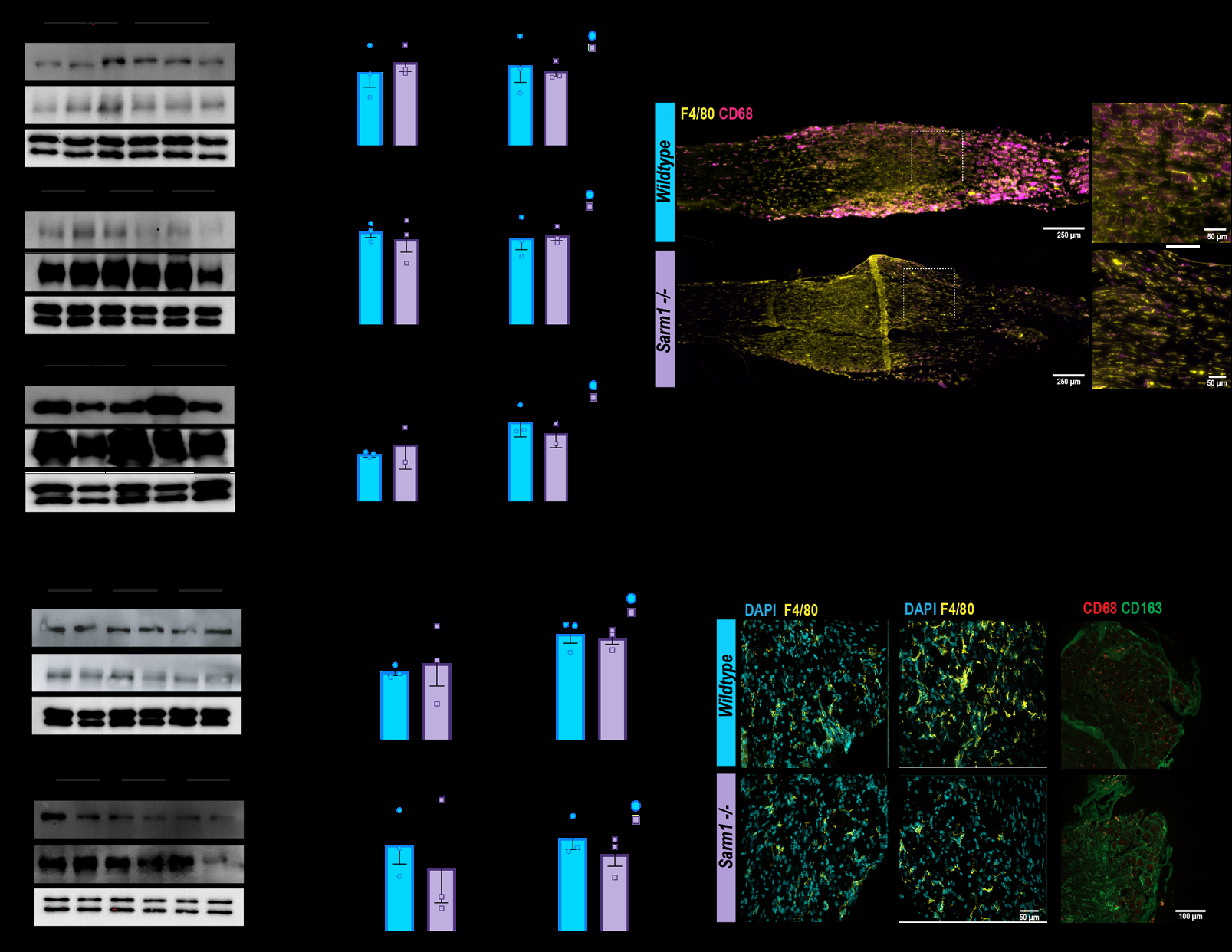
Macrophages are resident to both the sciatic nerve and dorsal root ganglia (DRG) but are present in very low numbers. Germline deletion of sarm1 ( Sarm1 ⁻/⁻) does not impair Mφ or immune cell composition in adult sciatic nerves. Western blot analysis of sciatic nerves after injury (SNC) shows no significant decrease in myeloid cells or Mφ by CD11b and CD68 expression respectively. However, consistent with previous work, while the injury site shows similar total macrophage accumulation, there is a decrease in the distal stump, as seen by F4/80. Further, there is a decrease in CD68⁺ Mφ in the distal stump of Sarm1 ⁻/⁻ mice, which could indicate a reduction in “activated” Mφ. Work has shown that Mφ also respond in the lumbar DRGs following SNC by altering cellular morphology, instead of recruiting additional infiltrating myeloid cells. To determine if loss of sarm1 impacts Mφ responses at the DRG, we lysed lumbar level DRGs before and after injury. Interestingly, we did not see any difference in WT and Sarm1 ⁻/⁻ animals. We then analyzed tissue sections to examine Mφ morphology and activation state. We found that in naïve DRGs, Mφ look similar morphologically in both WT and Sarm1 ⁻/⁻. However, 7 days after SNC we see a qualitative reduction in expansion of Mφ volume by F4/80 staining in the Sarm1 ⁻/⁻ animals. Further, Sarm1 ⁻/⁻ display an increase in CD163⁺ positive Mφ in DRGs 7 days post-SNC compared to WT, suggesting that Sarm1 ⁻/⁻ Mφ are still in a homeostatic state. Together with previous work, the reduction in Mφ accumulation and/or activation in the Sarm1 ⁻/⁻ mice suggests an important role for SARM1 in Mφ activation.
SARM1 is expressed in mouse primary Mφ
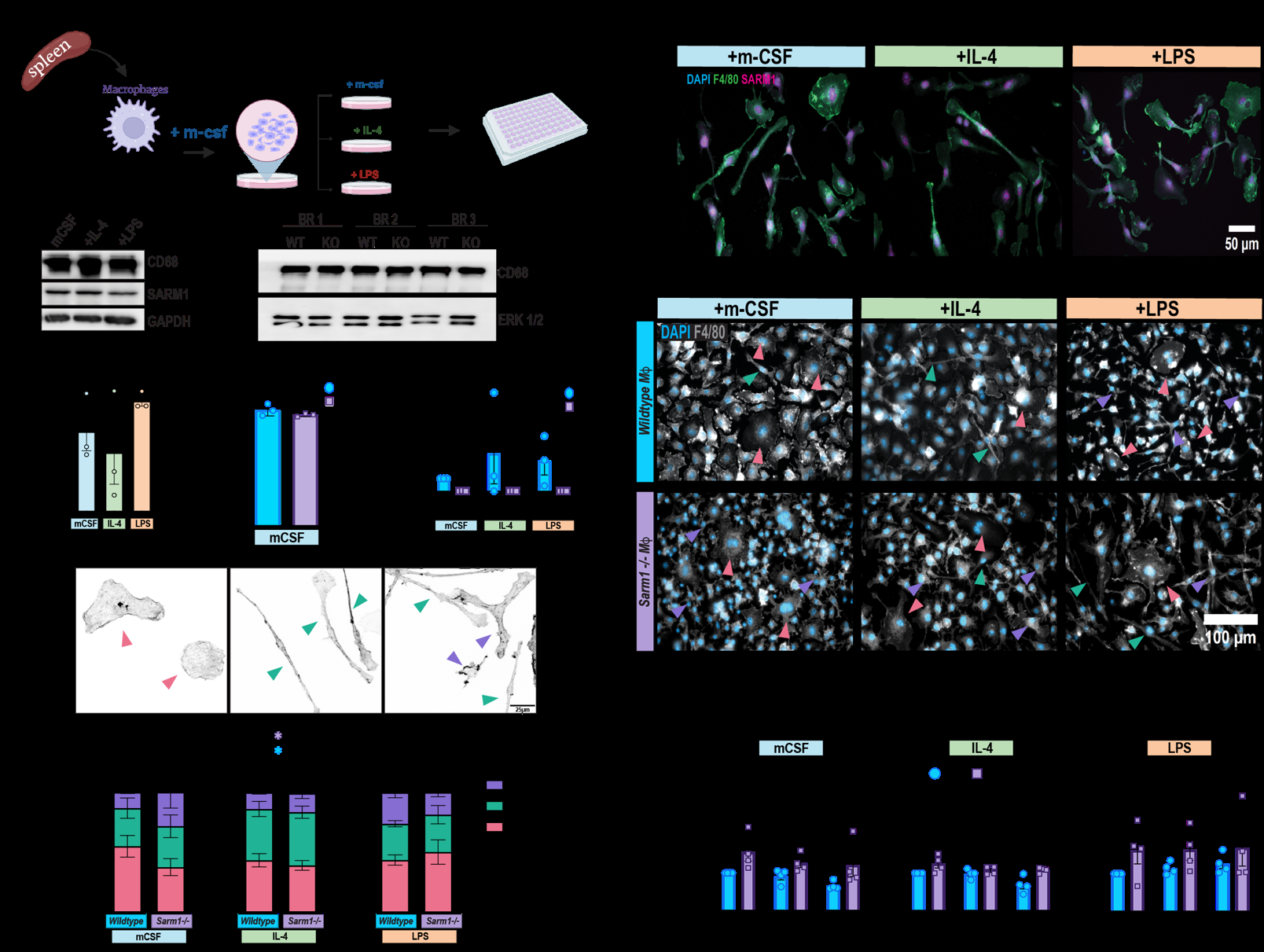
We chose to polarize Mφ from the spleen due to their abundance and sensitivity to immunological stimuli in vitro. To determine the optimal time to treat the Mφ, we assessed morphology at different time points after culturing. Initially after plating, most Mφ were still non-adherent and in suspension. These cells were not included in total cell counts, but were included in confluency analysis. By 5 days in vitro (DIV), most cells were adherent and >50% confluency. Thus, we determined that 5 DIV was an optimal time to treat the Mφ.
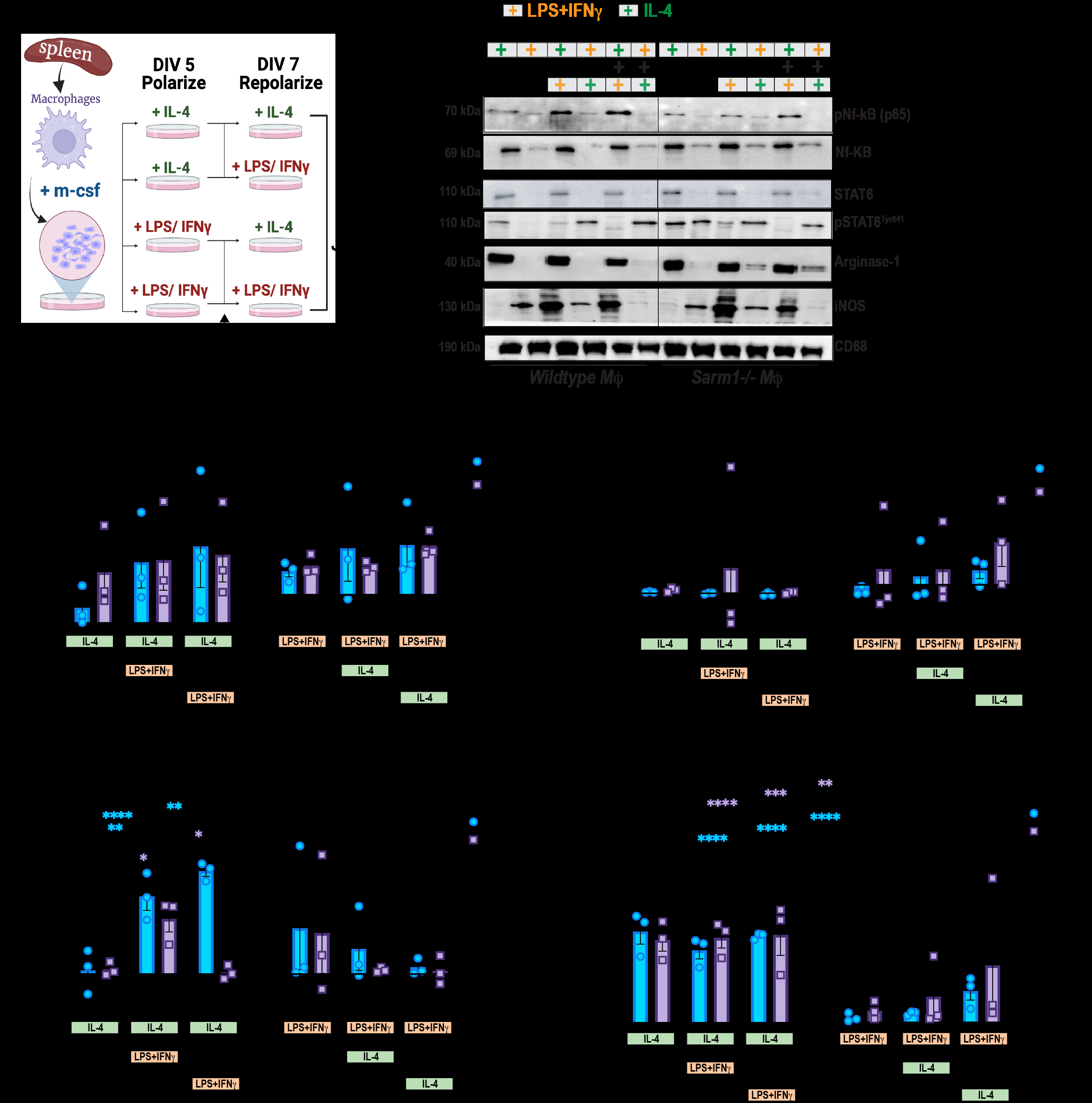
We cultured Mφ for 5 days in m-CSF and 10% FBS to ensure we reached a homeostatic environment. On day 5, we supplemented media with either IL-4 to polarize these Mφ towards anti-inflammatory, or IFNγ or lipopolysaccharide (LPS), to polarize towards pro-inflammatory. m-CSF + 10% FBS was used as a control medium. We polarized Mφ for 24 hours with immunological stimuli and induced stress by replating. Purity of cultures was confirmed by F4/80 or CD68. Mφ were then analyzed 24 hours after replating. SARM1 was readily detectable in Mφ regardless of prior immunological stimulation. This is consistent with recent reports in cultured bone-marrow-derived Mφ treated with LPS or IL-4. We further confirmed SARM1 expression at the protein level by western blot and at the transcript level by qRT-PCR. Notably, there was a trending increase in expression at the protein level in the LPS conditions, but variability at the RNA level in both IL-4 and LPS conditions. These data support recent reports that SARM1 is expressed in cultured Mφ.
Loss of sarm1 alters Mφ response to microenvironmental signaling
We found that our culture paradigm led to distinct morphological differences in the Mφ populations, indicating that polarization by immunological stimuli led to changes in Mφ immunophenotypes. Assessment of F4/80⁺ Mφ by phase contrast showed 3 distinct Mφ phenotypes: Large/round, elongated, and stellate. Small Mφ were considered to be uniformly round monocytes that have not matured into Mφ and were therefore excluded from downstream morphological analysis. Large and round Mφ were classified by extensive cytoplasm and a defined F-actin cytoskeleton. These are typically phagocytic and considered to be pro-inflammatory. Elongated Mφ were classified by F-actin protrusions extending unilaterally or bilaterally. Elongated Mφ are typical of pro-regenerative or wound-healing Mφ. Stellate Mφ were defined as ratified or star-shaped. As previous work indicates that stellate Mφ may support neuronal growth or prevent cell death following SNC, we considered them to be an anti-inflammatory phenotype.
Chi-squared analysis of cell morphology phenotypes showed significant differences across immunological stimuli for both WT and Sarm1 ⁻/⁻. Consistent with previous reports, IL-4 treatment resulted in the most defined elongated Mφ phenotype. LPS treatment led to an increase in stellate Mφ compared to both mCSF and IL-4 treatment. Interestingly, at baseline conditions (treatment with mCSF), we found the most significant difference between WT and Sarm1 ⁻/⁻ Mφ morphologies. Consistent with the increased CD163 expression of Sarm1 ⁻/⁻ Mφ in DRGs after SNC, Sarm1 ⁻/⁻ Mφ showed increases in stellate and elongated morphologies regardless of immunological stimuli stimulation, suggesting that loss of Sarm1 leads to more alternatively activated or anti-inflammatory Mφ phenotypes.
To determine if altered morphologies of Sarm1 ⁻/⁻ splenic Mφ are due to an accumulation of NAD⁺ levels, we performed a NAD/NADH Glo assay. While we found a reduction in NAD⁺ consumption in all stimulation conditions in the Sarm1 ⁻/⁻ Mφ, there was little consumption of NAD⁺ in the WT cells at these time points. Notably, there was only a significant difference in consumption between genotypes 4 hours after replating in the IL-4 conditions. These data suggest that SARM1-dependent NAD⁺ metabolism is unlikely to alter Mφ phenotypes in Sarm1 ⁻/⁻ mice.
To determine if phenotypic changes resulted from alterations in cell number, proliferation, or confluency, we analyzed cultures over time and quantified total cell counts and confluency every 2 hours over 6 days. While the total cell number increased rapidly between 24 and 48 hours for both WT and Sarm1 ⁻/⁻ cells, there was a significantly higher WT cell count between 64 and 80 hours. As Mφ maturation continues through DIV 4 and 5, we see a continued trend of decreased cell counts in Sarm1 ⁻/⁻, but it does not reach statistical significance. Interestingly, while there is reduced total cell counts during this 5-day period for Sarm1 ⁻/⁻ Mφ, there is a significant increase in confluence between 68-88 hours, likely due to changes in overall cell morphology. However, by DIV 4 and 5 there is no difference between genotypes. Further, there is no difference in caspase-mediated cell death or in cell proliferation. Together, this suggests that only Mφ maturation and polarization are impacted by loss of sarm1 . This is consistent with previous work showing delayed Mφ maturation following sciatic nerve injury in Sarm1 ⁻/⁻ animals.
Loss of Sarm1 alters Mφ response to injury
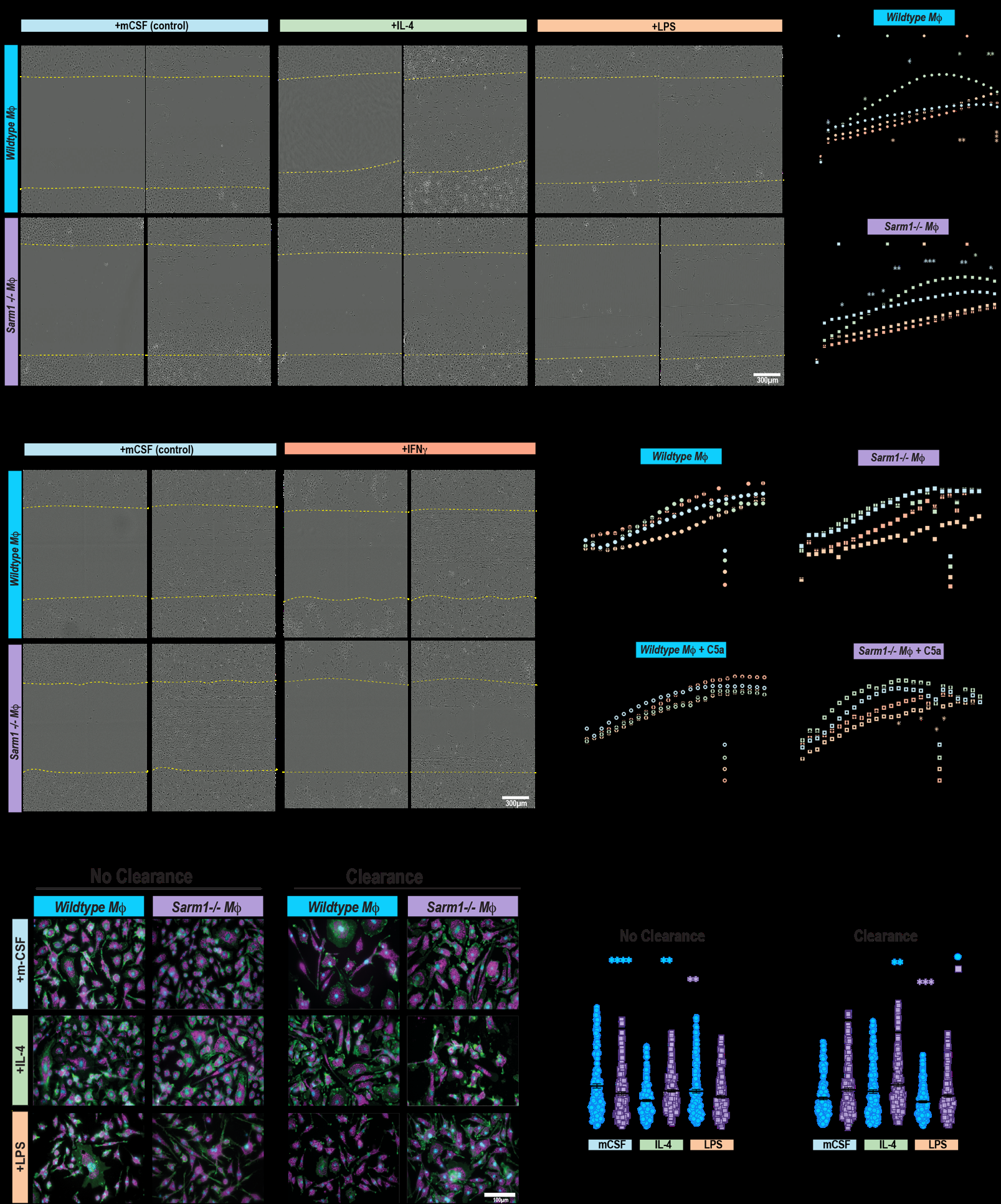
The altered phenotypes of Sarm1 ⁻/⁻ Mφ suggest they might have altered functions. We subjected polarized Mφ to a two-dimensional scratch wound assay. Here, Mφ were plated to near confluency (~90%) and a scratch was induced using a WoundMaker tool. Mφ were then monitored by live imaging every 2 hours for 48 hours. Regardless of genotype, IL-4 treated Mφ showed the most wound closure as measured by relative wound density. A simple linear regression analysis to identify rate (slope) and density (elevation) showed significant differences between genotypes in elevation for mCSF and IFNγ conditions, and a significant difference in slope for LPS conditions, but no differences for IL-4 stimulation. These data suggest that immunological stimuli differentially impacts WT and Sarm1 ⁻/⁻ Mφ.
Within group analyses further highlighted immunological stimuli differences. WT Mφ display significant increase in relative wound density over time for mCSF, IL-4, and LPS conditions, but not IFNγ. Additionally, IL-4 treated WT Mφ showed significant increase in wound closure compared to mCSF conditions between 36-42 hours post scratch. Sarm1 ⁻/⁻ Mφ on the other hand displayed significant increases in relative wound density over time in only mCSF and IL-4 conditions. Further, there was significant decrease in wound density in both LPS and IFNγ conditions compared to mCSF post scratch. Together, these data suggest that Sarm1 ⁻/⁻ Mφ may be more alternatively activated (anti-inflammatory) and primed for wound healing, and that IL-4 stimulation further enhances this phenotype. However, when Sarm1 ⁻/⁻ Mφ are classically activated (with LPS or IFNγ), they fail to make a rapid transition during the scratch assay to fully close the wound.
We recently demonstrated that there is a decrease in Mφ accumulation in distal nerves of Sarm1 ⁻/⁻ mice after sciatic nerve crush. Since a majority of these Mφ are derived from monocyte precursors from the blood, we reasoned that Sarm1 ⁻/⁻ Mφ may have impaired invasion mechanisms. We seeded Mφ on a layer of Matrigel before inducing a scratch wound. We followed that by another layer of Matrigel so that the Mφ were encased in a three-dimensional matrix during wound healing. Similar to the two-dimensional scratch assay, Sarm1 ⁻/⁻ Mφ at baseline (mCSF condition) and treated with IL-4 performed better than WT Mφ. Although, WT Mφ also eventually showed full wound closure by 48 hours. However, when Mφ were polarized with LPS or IFNγ prior to the invasion assay, Sarm1 ⁻/⁻ Mφ significantly lagged behind WT, and failed to close the wound even at 48 hours. The addition of C5a, a potent chemoattractant, did rescue this deficit in the IFNγ treated condition, but not in the LPS condition. This further suggests that at baseline, Sarm1 ⁻/⁻ Mφ are more alternatively activated (“M2”), and that classical activation (“M1”) impairs their response to wound healing assays.
Loss of Sarm1 impairs clearance of PNS myelin
Alternatively activated Mφ, or those that are in a “wound healing” state are essential for myelin debris clearance following peripheral nerve injury. We postulated that Sarm1 ⁻/⁻ Mφ at baseline or treated with IL-4 would show enhanced myelin phagocytosis compared to WT as our data suggests they are more alternatively activated. Further, our previous work showed Sarm1 ⁻/⁻ mice still have lipid-laden Mφ 6 weeks post-sciatic nerve injury when they should have cleared it, indicating that while phagocytosis may be intact or possibly enhanced, clearance of debris may be impaired. We cultured splenic Mφ from WT and Sarm1 ⁻/⁻ mice and polarized them with either IL-4 or LPS. We then added crude myelin homogenates harvested from sciatic nerves of WT donor mice at a concentration of 1% weight/volume. Mφ were either exposed to the myelin homogenate for 24 hours and then fixed (no clearance) or given a recovery period of 24 hours (clearance) where the myelin was removed and fresh non-myelin media was replaced. This allowed us to quantify phagocytic uptake in the no clearance condition and processing of the phagocytosed myelin in the 24-hour clearance condition.
Interestingly, we found a significant increase in lipid uptake, based on OilRedO intensity in Sarm1 ⁻/⁻ Mφ treated with IL-4 compared to WT. There was no difference between genotypes at baseline or with LPS stimulation, however Sarm1 ⁻/⁻ Mφ did show a trending decrease. Additionally, when we gave the Mφ time to process the phagocytosed myelin, we found that Sarm1 ⁻/⁻ Mφ showed overall increased OilRedO intensity compared to WT macrophages in all conditions, indicating significant decreases in clearance. In all conditions, Sarm1 ⁻/⁻ mice showed overall increased OilRedO intensity compared to WT Mφ. Altogether, this data suggests that while loss of sarm1 does not impair myelin uptake, it does have a negative impact on clearance.
Sarm1⁻/⁻ Mφ display mixed phenotypes following stimulation
To understand the molecular changes in Sarm1 ⁻/⁻ Mφ that could explain the outcome of the physiological assays, we turned to characterized immunophenotypes. While SARM1 is well known for its role as an NADase in axons following injury, SARM1 was originally identified as a key component of the innate immune system. SARM1 is one of 5 toll-like adapter proteins and suppresses signaling downstream of Toll-like receptor (TLR) 4 and 2 activation through direct binding to MYD88 and TRIF proteins. Since LPS stimulates TLR4 signaling, we posited that loss of sarm1 should lead to enhanced downstream gene expression. Concurrently, we expected that mCSF or IL-4 treatment would have little impact on gene expression in the absence of sarm1 since SARM1 is not known to modulate immunological stimuli receptor signaling directly.
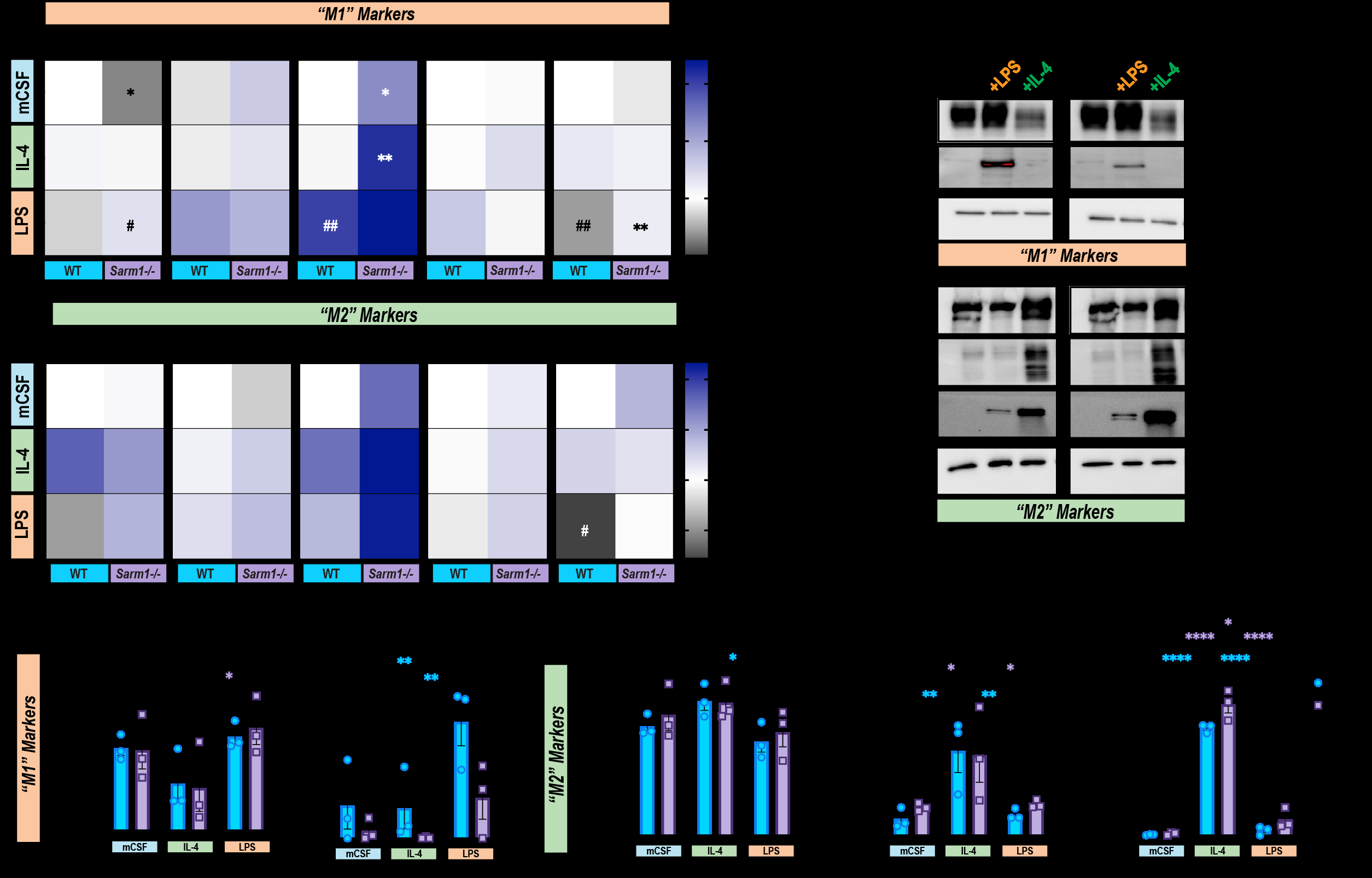
We chose several genes associated with either M1 or M2 state based on previous literature. RNA was harvested from 24-hour polarized Mφ and processed for qRT-PCR. All conditions were normalized to 12s as an internal control. Interestingly, if we compare the effect of immunological stimuli only (independent of genotype), we see differential changes in all gene expression. Regardless of whether the genes are associated with M1 or M2 immunophenotypes, Sarm1 ⁻/⁻ Mφ showed more variability between biological replicates as indicated by large standard error. For many genes, Sarm1 ⁻/⁻ Mφ tend to increase expression of genes in both IL-4 and LPS conditions ( tnfa , nos2 , tgfb , arginase , pgrn ). This was interesting because several of these genes are typically regulating opposing processes, suggesting that loss of sarm1 dysregulates gene expression indiscriminately.
To assess the effect of sarm1 loss on gene expression during polarization, we normalized expression to the WT mCSF condition. Interestingly, Sarm1 ⁻/⁻ Mφ had more dynamic changes in gene expression (although the variability was consistently higher compared to WT Mφ), regardless of association with M1 or M2 Mφ, and regardless of immunological stimuli. Log transformation of these data and presented as heat maps indicate both stimulation-dependent and genotype-dependent differences in gene expression. In particular, nos2 is significantly increased with mCSF and IL-4 conditions, while at the same time arginase is also increased in all stimulation conditions in Sarm1 ⁻/⁻ Mφ. Further, there is downregulation of tnfa in mCSF conditions, but increases in nfkb expression with LPS compared to WT Mφ. These data suggest that SARM1 may be required in Mφ for proper gene expression in response to stimuli. Without sarm1 , Mφ have a dysregulated gene expression that prevents the adoption of a complete immunophenotype.
As another measure of immunophenotype, we probed Mφ for proteins that are more associated with M1 or M2 phenotypes. WT Mφ significantly upregulated M1-associated proteins like iNOS with LPS stimulation while downregulated these proteins with IL-4 stimulation. Similarly, WT Mφ upregulated M2-associated proteins such as Dectin-1 and Arginase-1 with IL-4 stimulation and downregulated these proteins with LPS stimulation. Similar to our gene expression results, Sarm1 ⁻/⁻ Mφ display mixed phenotypes regardless of stimuli. Interestingly, there is a trending increased expression of CD14, Dectin-1 and Arginase-1 in Sarm1 ⁻/⁻ compared to WT Mφ in LPS conditions, although this is not significant. However, there is a significant upregulation of Arginase-1 in Sarm1 ⁻/⁻ Mφ with IL-4 stimulation compared to WT. It is worth noting that immunological stimuli differentially impacts Mφ within genotypes. For Dectin-1, Sarm1 ⁻/⁻ show reduced upregulation and downregulation of this protein when stimulated with IL-4 and LPS compared to WT mCSF, and levels trended towards overall upregulation. Similarly, Sarm1 ⁻/⁻ failed to downregulate CD206 expression with LPS stimulation. These data suggest that Sarm1 ⁻/⁻ Mφ may overactivate M1 and M2 pathways independent of stimulation, reducing a full adoption of a singular immunophenotype.
SARM1 is required for Mφ immunophenotype switching
Our results suggest that Sarm1 ⁻/⁻ Mφ are more alternatively activated at baseline and treatment with IL-4 pushes them into an enhanced “wound healing” state. However, these Mφ struggle to adopt a classical activation phenotype when challenged with LPS or IFNγ. This led us to hypothesize that SARM1 may be required for Mφ to switch between different immunophenotypes in response to stimuli. We designed a repolarization assay where Mφ were initially polarized with one immunological stimuli and then after 48 hours switched to an opposing immunological stimuli. This allowed us to probe whether or not Sarm1 ⁻/⁻ Mφ could switch between “M1 and M2” states based on known molecular markers. Importantly, we not only challenged the Mφ by switching their immunological stimuli, but we also included a replating step for some of the Mφ. This additional challenge could either enhance or suppress the immunophenotype switch. Nine days after culturing the Mφ we harvested lysates for western blot analysis. We probed for known regulators of immunophenotype switching such as Arginase-1 and iNOS, as well as master regulators of immunological stimuli expression, p65 and pSTAT6.
Unsurprisingly, while we saw an upregulation of NFκB expression and activation of p65 when Mφ were forced to switch from an M2 to an M1 state, we did not see any differences between genotypes. Previously literature has suggested that p65 activation is dependent on SARM1 expression, but this may be context-specific. However, we did see significant differences between genotypes in iNOS expression, and trending differences in Arginase-1 expression. Interestingly, Sarm1 ⁻/⁻ Mφ do upregulate iNOS when transitioning between M2 to M1 states, although to a lesser extent than WT. However, when these Mφ are replated prior to the LPS addition for the repolarization, Sarm1 ⁻/⁻ Mφ fail to upregulate iNOS. This suggests that a second stimulation actually inhibits their ability to make the immunophenotype switch in response to immunological stimuli. Further, overall, Sarm1 ⁻/⁻ Mφ maintain higher levels of Arginase-1 expression regardless of immunological stimuli during the repolarization experiments. This further supports the possibility that Sarm1 ⁻/⁻ Mφ are more alternatively activated and while they are able to switch between immunophenotypes it is dysregulated and incomplete.
Since iNOS and Arginase-1 expression are linked to changes to metabolism, we asked if the changes in protein expression were due to NAD consumption. We performed a NAD⁺/NADH Glo assay in the repolarized conditions. There was no difference in overall consumption between WT and Sarm1 ⁻/⁻ Mφ, suggesting that immunophenotype switching may be independent of SARM1 NADase activity.
Differential neurite outgrowth from polarized Mφ is SARM1 dependent
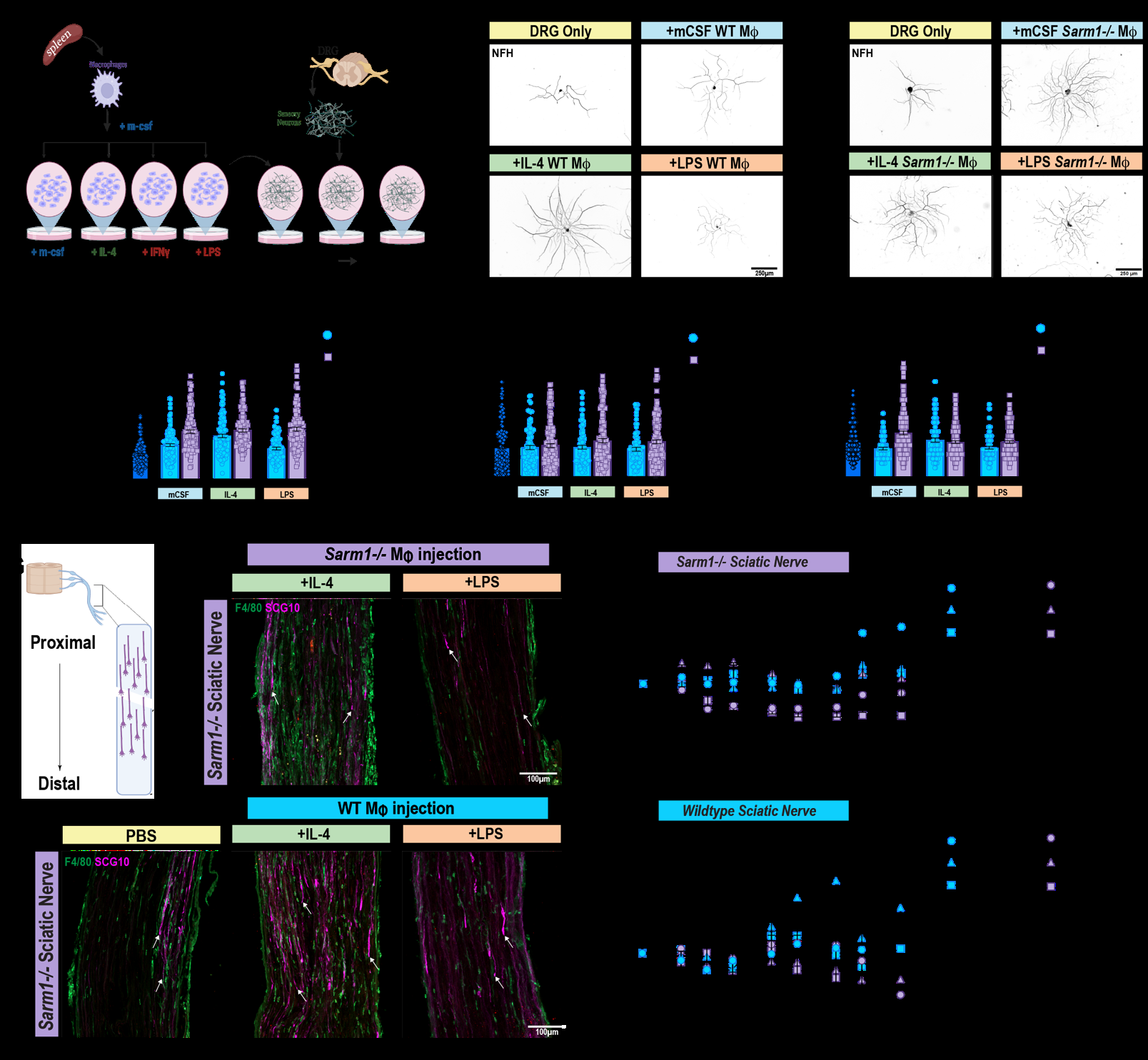
It has been clearly demonstrated that Mφ are important during the neuronal injury response. To determine if alterations in Mφ phenotype from the loss of sarm1 has other functional implications, we established a neuronal-Mφ co-culture system. DRG neurons are easily culturable from adult rodents and have been shown to be highly sensitive to their environment. Neurite length is a common measure for growth or regenerative state of the neurons in vitro. To determine if the growth of neurites were impacted in the presence of Mφ, we first plated naïve adult DRG neurons onto glass coverslips. 24 hours later, we replated polarized Mφ on top of the DRG neurons and left them in culture for another 24 hours. Using this method allowed us to assess the growth of neurites rather than their initiation which occurs during the first day in vitro. Neurite outgrowth was significantly enhanced in WT DRG neurons regardless of Mφ polarization state compared to WT DRGs cultured alone. This was unsurprising as recent reports showed similar growth enhancement of DRG axons when cultured with neutrophils. However, analysis within the Mφ treatment groups showed a significant increase in both longest neurite length and branching with IL-4 treatment compared to mCSF treated controls. LPS treated Mφ significantly decreased neurite length compared to IL-4 treatment but was not significantly decreased compared to mCSF treatment. These data suggest that DRG neurite growth is influenced by Mφ polarization state.
To determine how WT Mφ are impacting neurite growth, we performed a Sholl analysis. Interestingly, there was no difference in Sholl decay between all conditions. This suggests that Mφ state does not affect neurite complexity, only total length of individual neurites. Previous reports have shown that injured PNS axons contain organized microtubule bundles and stabilization of CNS axons improves regeneration. Therefore, we asked if the increase in neurite length was due to changes in microtubule stability. We stained DRG neurons from our co-cultures for acetylated tubulin. Consistent with other reports, we saw the highest expression of acetylated α-tubulin in the proximal axon shaft, regardless of immunological stimuli of Mφ. Suggesting that overall, stimulated Mφ do not differentially impact microtubule stability through acetylation.
Our data suggests that polarized Mφ differentially promote neurite length of sensory neurons. We next asked if SARM1 expression in Mφ is required in modulating axon growth of DRG neurons. Interestingly, Sarm1 ⁻/⁻ Mφ, regardless of immunological stimuli, also enhanced WT axon outgrowth. While there was no significant difference in neurite length between stimulation conditions, overall growth was enhanced above WT lengths when compared to stimulated WT Mφ. Interestingly, Sarm1 ⁻/⁻ Mφ in mCSF conditions lead to significantly higher branching of WT neurons compared to WT Mφ. These data further support a role for SARM1 in Mφ response to stimulation. The overall enhancement of DRG neurite outgrowth regardless of Sarm1 ⁻/⁻ Mφ state, could suggest that phenotypically, Sarm1 ⁻/⁻ Mφ are more alternatively activated (anti-inflammatory) than WT Mφ. Further, it suggests that Sarm1 ⁻/⁻ Mφ do not respond to immunological stimuli polarization to the same extent as WT Mφ, indicating SARM1 as a potential regulator of Mφ immunophenotype state.
Our previous work showed that Sarm1 ⁻/⁻ nerves are hostile and do not support growth but grafting of WT nerves into Sarm1 ⁻/⁻ can rescue the regeneration deficit. Since IL-4 stimulated Mφ enhanced outgrowth of Sarm1 ⁻/⁻ DRG neurons in vitro, we posited that we could rescue the regeneration of the Sarm1 ⁻/⁻ mice by adding these Mφ to the injured distal nerve. We polarized WT tdTomato-expressing splenic Mφ with IL-4, mCSF, or LPS. We performed a sciatic nerve crush in Sarm1 ⁻/⁻ mice and, immediately after and distal to the crush, we injected approximately 50,000 Mφ. Three days later we quantified the amount of regeneration by SCG10 immunostaining. mCSF treated WT Mφ partially rescued regeneration in Sarm1 ⁻/⁻ mice compared to PBS controls. IL-4 treated Sarm1 ⁻/⁻ Mφ enhanced regeneration close to the injury site compared to PBS, but not at distances farther from the injury site. Both mCSF and LPS treated Sarm1 ⁻/⁻ Mφ on the other hand decreased regeneration compared to PBS. Interestingly, when WT or Sarm1 ⁻/⁻ Mφ were injected into a WT sciatic nerve, only IL-4 stimulated WT Mφ partially rescued regeneration. This is consistent with recent reports that IL-4 itself, and IL-4 Mφ stimulate axon regeneration. In fact, Sarm1 ⁻/⁻ Mφ, regardless of immunological stimuli polarization, decreased regeneration in WT mice compared to PBS. These data emphasize that loss of sarm1 impairs Mφ response to stimulation. The inability of Mφ to respond to environmental cues and adjust their immunophenotype likely increases the hostility of the injured nerve and does not support axon regeneration.
SARM1 is required in both neurons and Mφ for an efficient injury response
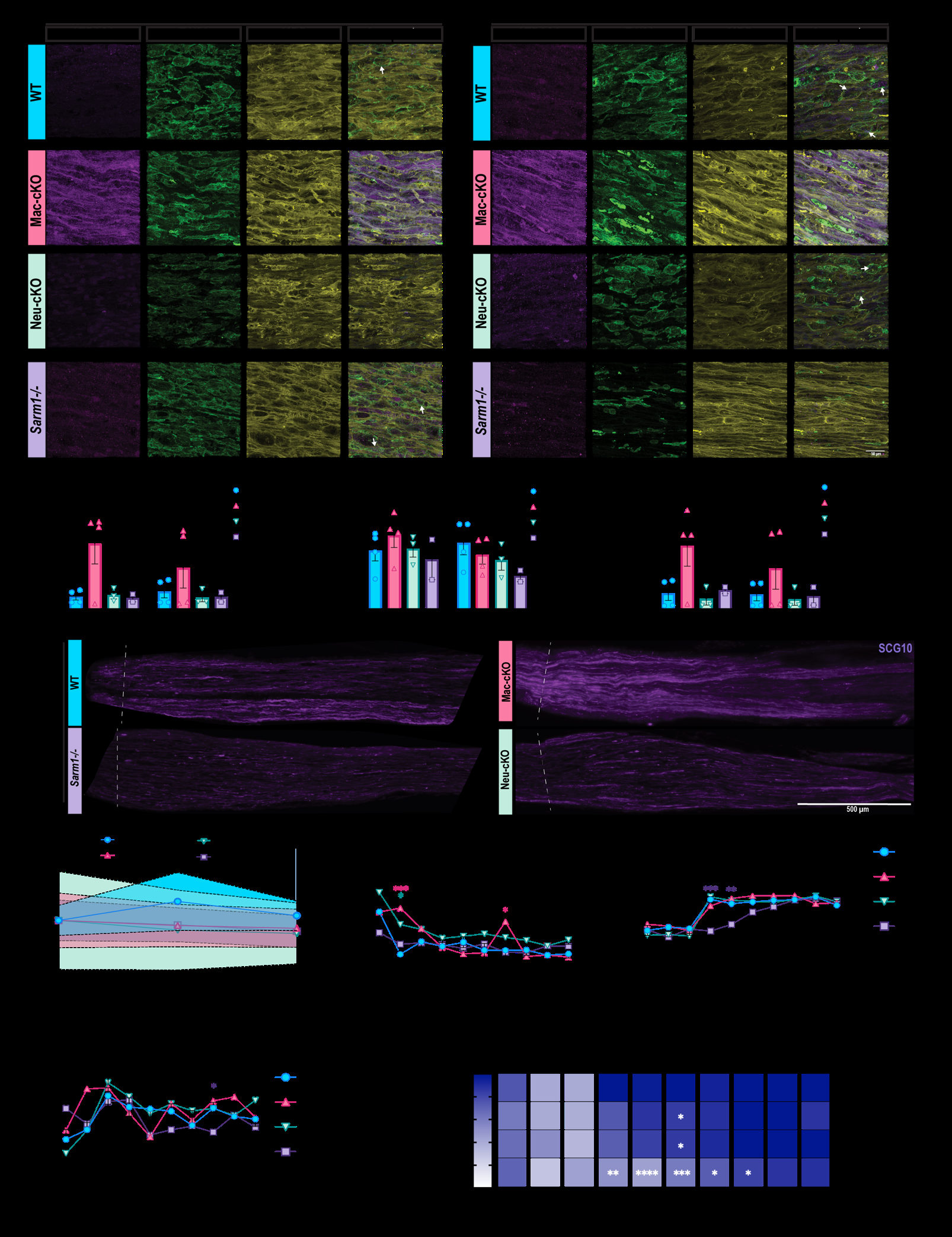
Our data suggest that SARM1 regulates immunophenotype-switching pathways in Mφ and the ability to undergo immunophenotype switching is important during the injury response. Injection of polarized sarm1 ⁻/⁻ Mφ, even those in an active “anti-inflammatory” state, failed to rescue regeneration in vivo. This suggests that immunophenotype switching is important during the injury response. To determine if loss of sarm1 from Mφ is responsible for the failed regeneration phenotype in germline Sarm1 ⁻/⁻ animals, we generated a Mφ conditional sarm1 knockout line. We crossed animals that had loxP sites flanking exons 3-6 of the sarm1 gene with a cre-line under a LysM promoter. We chose this promoter as LysM⁺ Mφ are significantly upregulated in the injured nerve and we wanted to remove sarm1 from this population of mature Mφ. As a control, we also generated a neuronal-specific sarm1 knockout line driven with a Syn1 promoter.
We first examined the state of Wallerian degeneration in these mice 7 days following SNC using the highly specific Degenotag antibody. This antibody specifically targets cleaved neurofilament light chain and does not recognize intact neurofilaments. Unsurprisingly, we saw extensive Degenotag signal in our WT mice and very little in Sarm1 ⁻/⁻ mice which is consistent with our previous work. Interestingly, we